Are Double-Glazed Windows Worth It in the Philippines?
They are standard in cold climates, but do they make sense here? The answer is yes, but only for specific rooms. Here is the engineering data, the AC savings, and the honest ROI calculation.
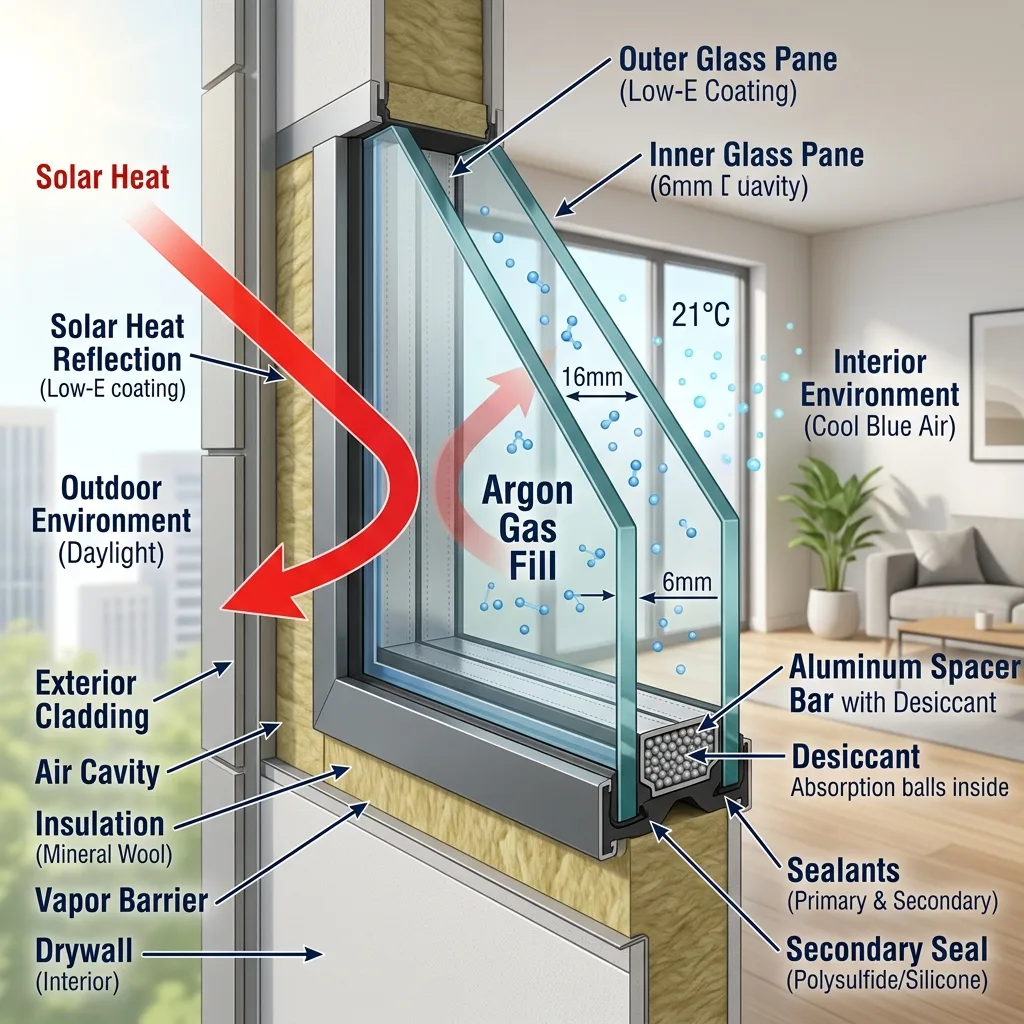
If you look at housing developments in North America or Europe, double-glazed windows are legally required by building codes. Their primary purpose there is to trap heat inside during freezing winters. Because the Philippines does not have winters, many local contractors dismiss double glazing as an unnecessary, overpriced luxury. This is a massive misunderstanding of building physics. While we don't need to keep heat in, we desperately need to keep solar heat out. Double-glazed windows—when specified correctly—are the single most effective way to lower your inverter AC bills in a Philippine home.
The Engineering: How Double Glazing Works
A double-glazed window is technically called an Insulated Glass Unit (IGU). Instead of a single sheet of 6mm glass, an IGU consists of two panes of glass separated by a sealed cavity. This cavity (usually 12mm to 16mm wide) is filled with dehydrated air or an inert heavy gas like Argon.
This argon-filled gap is the secret. Heat transfers easily through solid glass (conduction). However, heat struggles to transfer through a pocket of still, dehydrated gas. The air gap acts as an invisible thermal blanket between the roasting 38°C outdoor air and your comfortable 22°C bedroom.
The "Low-E" Requirement for the Tropics
If you install a standard clear IGU in the Philippines, you are wasting your money. To make double-glazing work in a tropical climate, the outer pane of glass must have a Low-Emissivity (Low-E) coating.
A Low-E coating is a microscopically thin layer of silver or tin oxide applied to the inside surface of the outer glass pane. When the intense afternoon Philippine sun hits the window, the Low-E coating acts like a mirror for infrared heat (the part of sunlight that makes you hot) bouncing it back outside, while still allowing visible light to pass through.
| Glass Specification | Solar Heat Gain (SHGC) | Meaning for your AC |
|---|---|---|
| Standard 6mm Clear (Single) | 0.82 | 82% of solar heat enters. AC runs at maximum. |
| Standard 6mm Tinted (Single) | 0.60 | 60% of solar heat enters. Noticeable improvement. |
| Double Glazed (Clear + Clear) | 0.70 | 70% of solar heat enters. (Not worth the cost). |
| Double Glazed (Low-E + Clear) | 0.25 - 0.35 | Only 25-35% of solar heat enters. Massive AC savings. |
Solving the "Sweating Window" (Condensation)
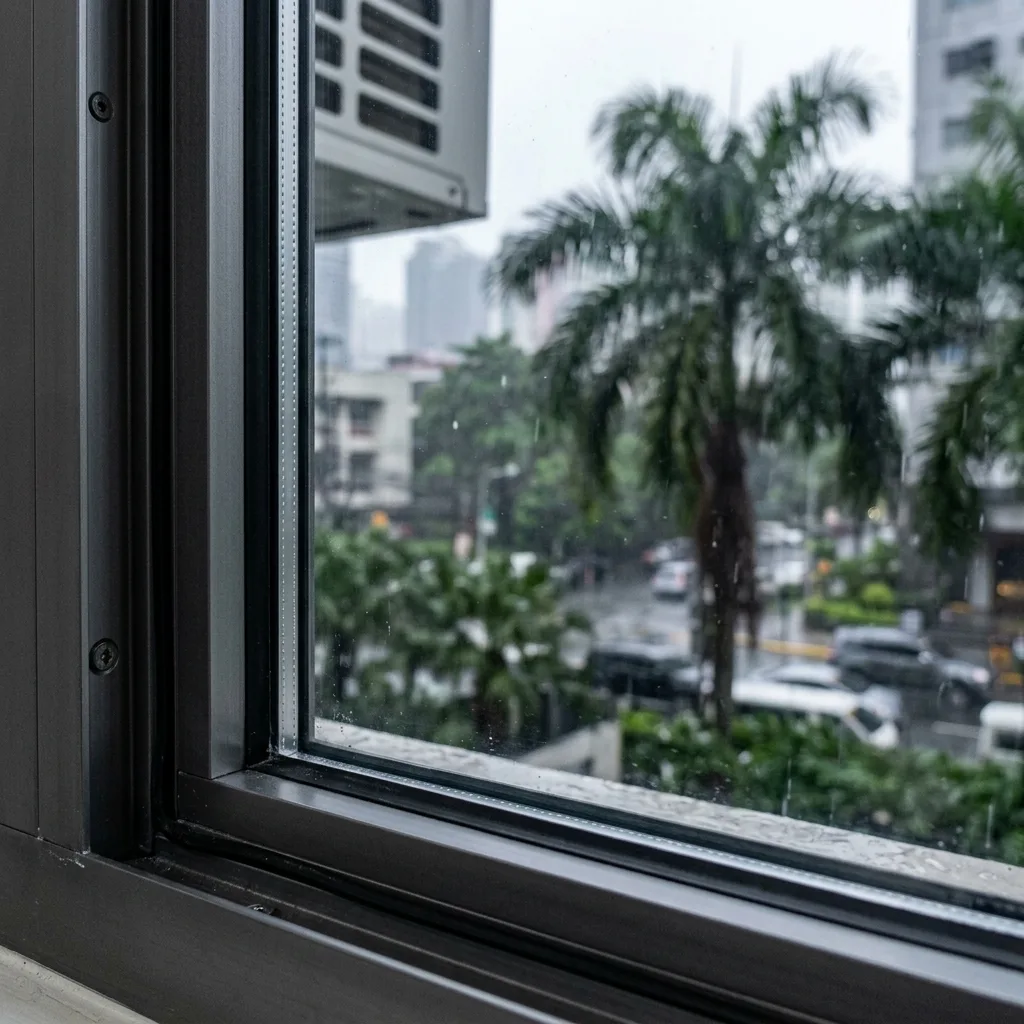
If you run your bedroom air conditioner at 18°C or 20°C during a humid Philippine monsoon night, you are familiar with the "sweating window" problem. The cold interior glass meets the warm, humid exterior air, causing massive condensation. Water pours down the glass, pooling on the windowsill, rotting wood frames, and causing toxic black mold to grow on your curtains.
Double glazing completely eliminates condensation. Because the inner pane is insulated from the outer pane by the air gap, the inner pane stays the same temperature as your room, while the outer pane stays the same temperature as the outdoors. No temperature clash means zero condensation. Your windowsills remain bone dry permanently.
Acoustic Performance (Noise Reduction)
Many homeowners upgrade to double glazing hoping to block out tricycle noise, barking dogs, and highway traffic. A standard double-glazed unit provides an STC (Sound Transmission Class) rating of about 32 to 34, compared to a single pane's rating of 26 to 28. This represents a noticeable drop in perceived noise — about a 30% reduction.
However, there is a catch. If your primary goal is soundproofing (not thermal insulation), standard double-glazing is actually the wrong product. Two sheets of identical thickness glass can suffer from "sympathetic resonance," where they vibrate at the same frequency and allow low-rumbling traffic noise to pass through. For extreme noise reduction, you should specify an asymmetric IGU (e.g., 6mm glass + 12mm air + 8mm glass) or skip double-glazing entirely and use a single pane of Laminated Acoustic Glass, which is cheaper and blocks more sound.
When Double Glazing IS Worth the Investment
Double-glazing costs roughly 80% to 120% more than standard single-pane windows. To ensure a return on investment, you should strategically deploy IGUs only where they make financial sense.
1. West-Facing Master Bedrooms. If your bedroom takes the brunt of the afternoon sun, the walls and floors absorb that heat and radiate it back all night. A Low-E double-glazed window cuts this heat gain by over 60%. Your inverter AC will spin down to its lowest power state within 30 minutes, saving you thousands of pesos per year.
2. Full-Height Glass Walls. If your living room features floor-to-ceiling glass facing the sun, single glazing will make the room unlivable during the day. Double glazing is mandatory here to keep the space comfortable.
3. Condensation-Prone Rooms. If you like your bedroom at 18°C and are tired of wiping up water every morning, double-glazing is the only permanent cure.
When Double Glazing is NOT Worth It
Do not put double-glazed windows everywhere. In these scenarios, you will never recoup your money:
1. North-facing windows. North facades in the Philippines receive almost zero direct sunlight. A standard single-pane tinted glass will perform almost as well thermally for half the price.
2. Naturally ventilated homes. If your lifestyle involves keeping the windows open most of the day to let breezes in, the insulation value of an IGU is completely wasted. You are insulating an open hole.
3. Bathrooms and Kitchens. These are utility areas where occupants don't spend hours sitting in the sun, and where heat is exhausted via exhaust fans. Use single glass here.
Cost Comparison and ROI (2026 Prices)
A standard Philippine bedroom window measures roughly 1.5 square meters. Here is the realistic cost comparison for the glass and frame package, and the estimated payback period based on current Meralco electricity rates.
| Window Specification | Estimated Cost / SQM | AC Energy Savings / Year | Payback Period |
|---|---|---|---|
| 6mm Single Clear Glass | ₱4,500 – ₱6,000 | Baseline (₱0) | N/A |
| 6mm Single Tinted Glass | ₱5,000 – ₱6,500 | ₱1,200 – ₱1,800 | Less than 1 Year |
| Double Glazed (Low-E IGU) | ₱12,000 – ₱16,000 | ₱4,500 – ₱6,500 | 3 to 4 Years |
At current electricity rates, a Low-E double-glazed window on a sun-facing bedroom will pay for its premium within 3 to 4 years. Since high-quality aluminum windows last 20+ years, the IGU will generate net-positive cash flow for over 15 years.
The Final Verdict
Are double-glazed windows worth it in the Philippines? Yes, absolutely — but selectively. Do not double-glaze your entire house. Spend the premium only on west and south-facing bedrooms and living areas where the AC runs frequently. For the rest of the house, high-quality single-pane tinted glass is the fiscally responsible choice. This hybrid approach gives you maximum thermal comfort while optimizing your construction budget.
Want to See the Math for Your Home?
We provide free site assessments to determine exactly which windows in your home justify a double-glazing upgrade, and which ones don't.