Energy Efficient Windows — How to Cut AC Costs in the Philippines
Your windows are the weakest link in your home's thermal defense. Here is the engineering behind how tinted glass, Low-E coatings, and proper sealing can permanently lower your monthly Meralco bill.
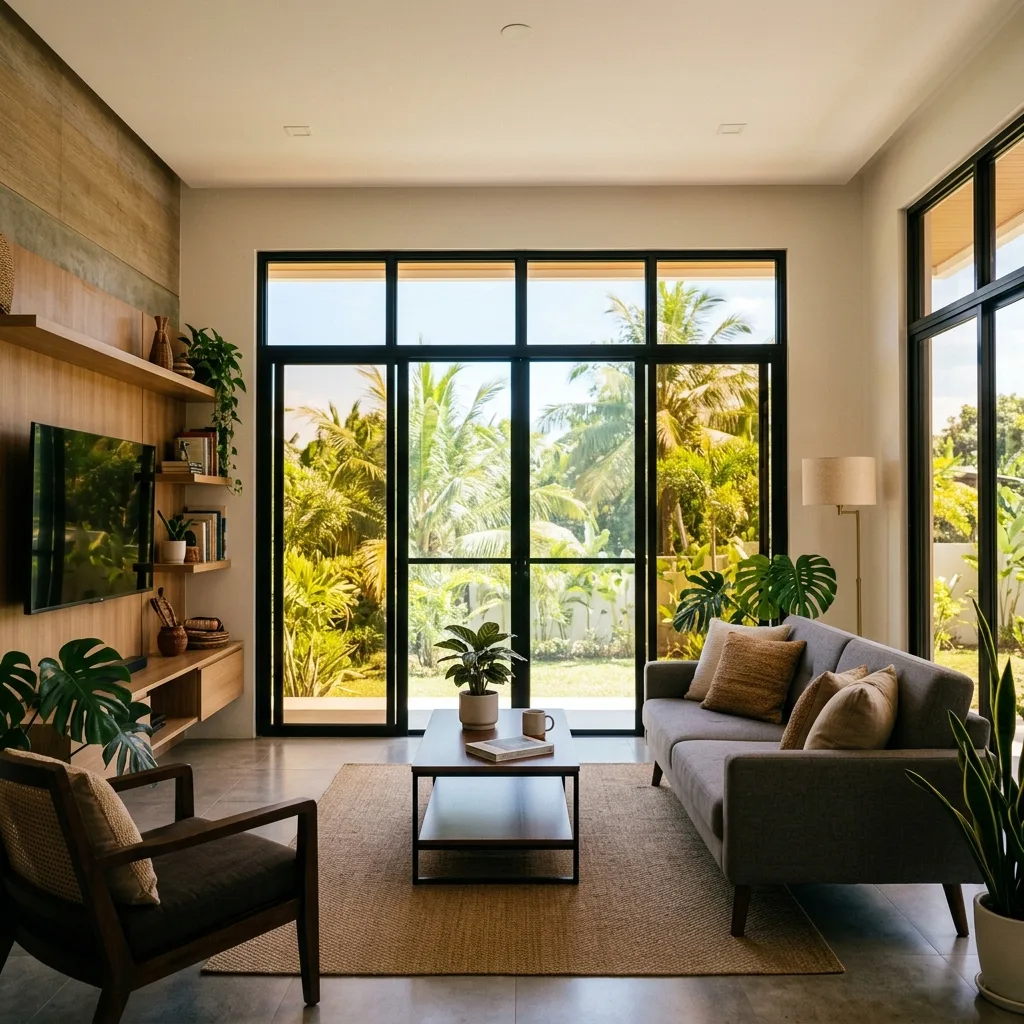
In a tropical country like the Philippines, air conditioning is not a luxury; it is a necessity that accounts for 40% to 60% of a household's total electricity consumption. When homeowners try to lower this bill, they usually buy a newer inverter AC unit. However, they ignore the root cause of the problem: the windows. Standard clear glass transmits massive amounts of solar radiation directly into your rooms, forcing your air conditioner to work at maximum capacity just to maintain a baseline temperature.
Where Your Cooling Energy Actually Goes
Before you spend money on upgrades, you must understand how heat enters a typical Philippine concrete house.
| Source of Heat Gain | Percentage of Cooling Load | Can Windows Fix This? |
|---|---|---|
| Solar Radiation through Glass | 35% - 45% | Yes (Primary Target) |
| Heat Conduction through Roof/Walls | 25% - 35% | No (Requires roof insulation) |
| Air Leakage (Drafts around frames) | 15% - 20% | Yes (Requires better window seals) |
| Internal Heat (People, Appliances) | 10% - 15% | No |
The data is clear: Windows are responsible for up to 65% of your total cooling load (combining solar radiation and air leakage). Upgrading your windows is the most impactful architectural change you can make for energy efficiency.
Strategy 1: Tinted Glass (The Budget Solution)
The simplest, most cost-effective upgrade from standard clear glass is body-tinted glass. During manufacturing, metal oxides are mixed into the molten glass to give it a permanent color—usually bronze, gray, dark gray, or green.
Tinted glass works by absorption. It absorbs a portion of the sun's solar energy before it can pass through into the room. A standard bronze or gray tinted glass reduces solar heat gain by 30% to 45% compared to clear glass. The cost premium is remarkably low—only 10% to 15% more than clear glass.
Strategy 2: Low-E Glass (The High-Tech Solution)
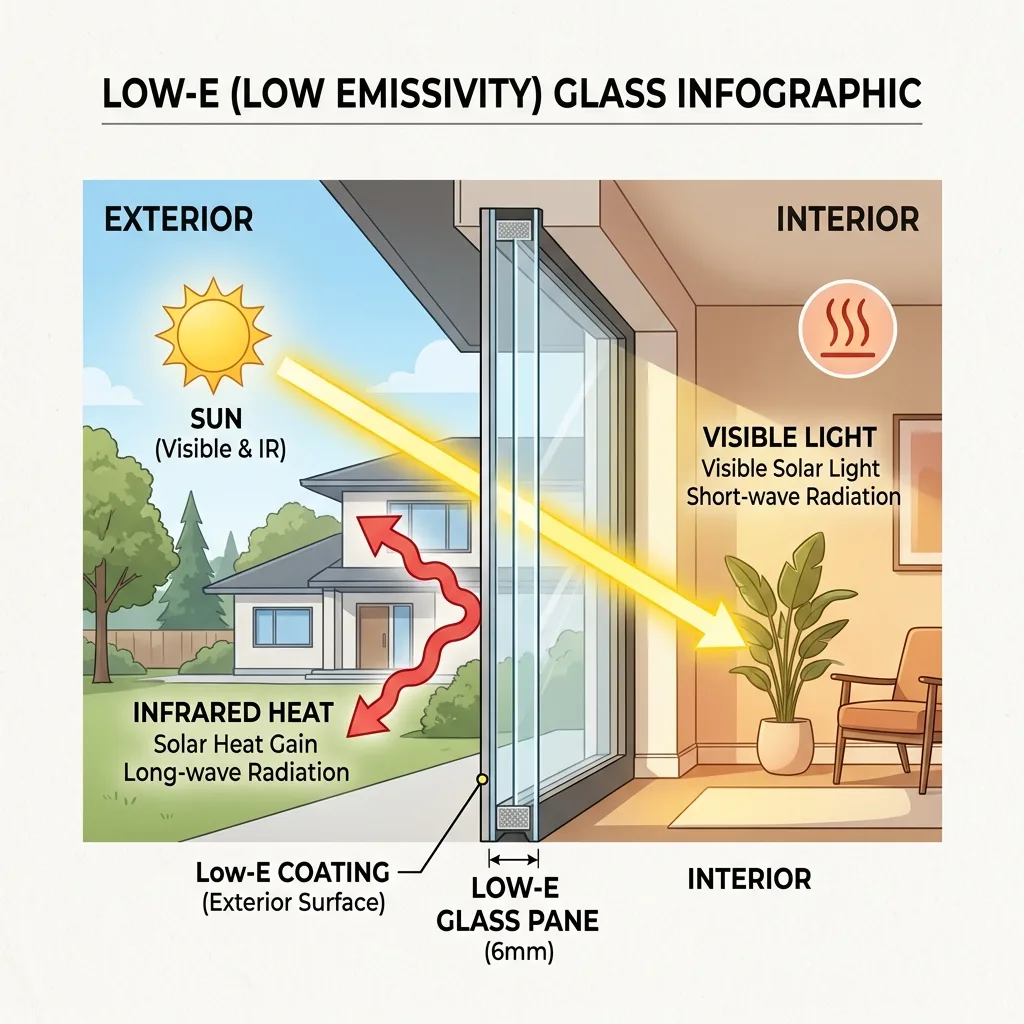
If you have the budget, Low-Emissivity (Low-E) glass is the gold standard for tropical climates. Unlike tinted glass (which absorbs heat and gets hot to the touch), Low-E glass works by reflection.
A microscopically thin, transparent layer of silver or tin oxide is applied to the glass surface. This coating is engineered to allow visible sunlight to pass through normally, but it acts like a mirror to infrared heat radiation (the invisible part of sunlight that makes a room feel hot). A high-quality Low-E window can block 60% to 75% of solar heat gain while remaining perfectly clear to look through.
Strategy 3: Air-Tight Frame Sealing
Even the most expensive Low-E glass is useless if the window frame leaks cold air. In the Philippines, the most common window type is the aluminum sliding window. Because sliding windows must move along a track, they cannot form a perfect seal; they rely on fuzzy brush strips (wool pile) to block air. Over time, these brush strips wear down, and your expensive conditioned air literally blows out through the gaps.
The Solution: Switch to casement or awning windows. These window types operate on hinges and close using a multi-point locking mechanism that pulls the window sash tight against a continuous EPDM rubber gasket. This creates a compression seal that is nearly 100% airtight. Upgrading from a sliding window to an awning window can reduce air conditioning leakage by 60% to 80%.
Strategy 4: External Shading (The Zero-Glass Solution)
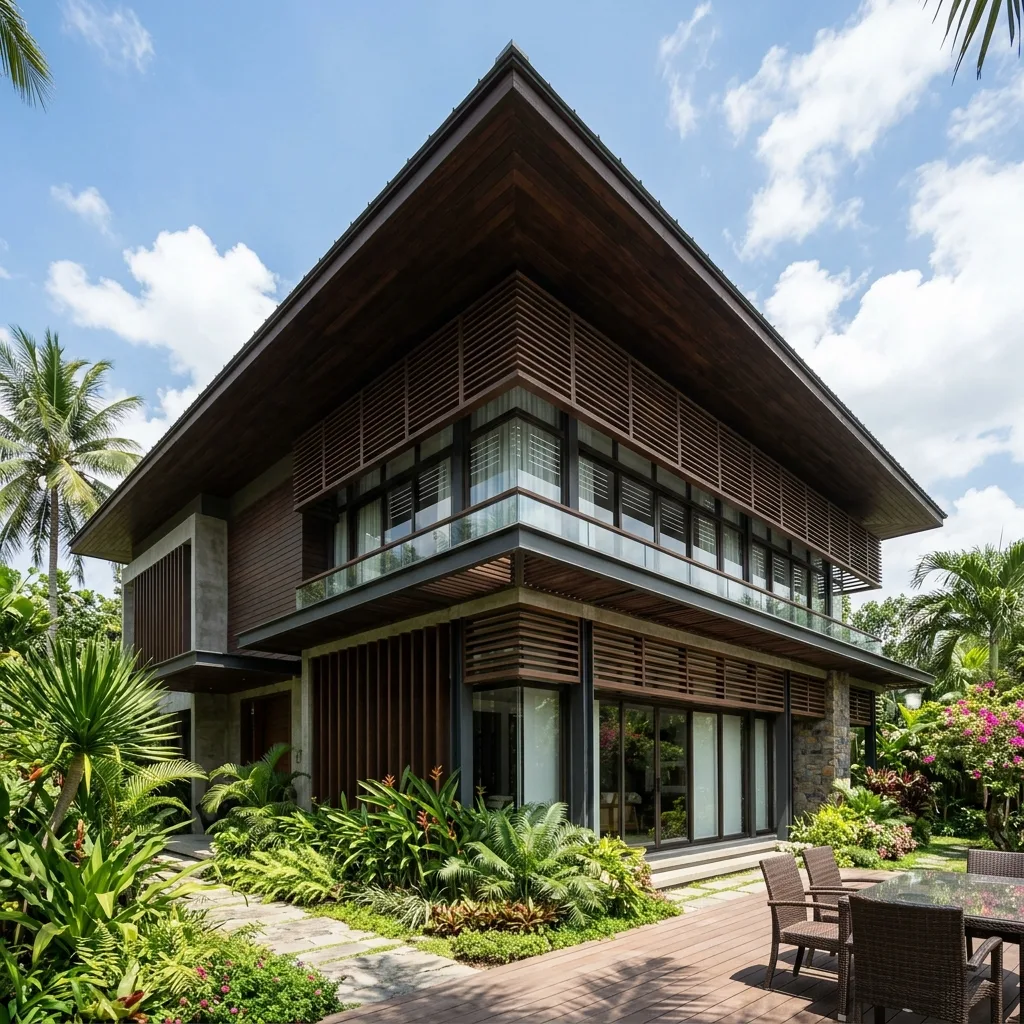
The most energy-efficient window is one that the sun never touches. Tropical architecture relies heavily on external shading devices to intercept solar radiation before it hits the glass.
Horizontal Overhangs: Deep roof eaves or horizontal louvers placed above south-facing windows block the high midday sun.
Vertical Fins: Vertical architectural fins or screens placed on the east and west facades block the low-angle morning and afternoon sun.
Exterior Roller Blinds: Bamboo or fabric blinds placed on the *outside* of the window are vastly superior to interior curtains. If the sun hits an interior curtain, the heat has already entered your room. An exterior blind stops the heat before it crosses the glass barrier.
Measuring Window Efficiency (SHGC and U-Value)
When requesting quotations from glass suppliers, you must ask for two specific metrics. Do not accept vague claims like "it reduces heat." Demand the numbers.
1. Solar Heat Gain Coefficient (SHGC): This measures the fraction of solar radiation admitted through a window. The scale is 0 to 1. A lower number means less heat enters. Standard clear glass has an SHGC of 0.82 (terrible). Good tinted glass has an SHGC of 0.55. Premium Low-E glass has an SHGC of 0.30 or lower.
2. U-Value: This measures how well the window prevents non-solar heat from transferring through conduction. A lower number is better. This metric is less critical in the Philippines than SHGC, but still important for double-glazed units.
Prioritizing Your Upgrades by ROI
You do not need to spend millions to achieve massive energy savings. The key is deploying the right strategy on the right side of the house. Here is the financially optimal way to upgrade your windows:
| Upgrade Action | Where to Apply It | Estimated Payback Period |
|---|---|---|
| Switch from Clear to Tinted Glass | North and East facades | Under 1 Year (Highly Recommended) |
| Switch from Sliding to Awning/Casement | Bedrooms with heavy AC use | 1 to 2 Years |
| Install Exterior Shading Devices | South-facing large windows | 2 to 3 Years |
| Upgrade to Single Low-E Glass | West-facing facades (Afternoon sun) | 3 to 4 Years |
| Upgrade to Double Glazed Low-E (IGU) | West-facing Master Bedrooms only | 4 to 6 Years |
Expected Financial Savings
Consider a typical Philippine household with three air-conditioned bedrooms and a total monthly Meralco bill of ₱12,000 (where ₱7,000 is directly attributed to air conditioning).
By upgrading from standard clear sliding windows to tinted awning windows on the east, and Low-E awning windows on the west, the cooling load is reduced by roughly 35%. This translates to an immediate savings of ₱2,450 per month, or nearly ₱30,000 per year. Over a 10-year period, these energy-efficient windows will return ₱300,000 in saved electricity costs—more than paying for the initial installation.
Want to Reduce Your AC Bills?
Contact us for a free site assessment. We will calculate the solar exposure of your specific rooms and recommend the most cost-effective glass upgrades.