Best Window Type for Philippine Bedrooms
A bedroom window must ventilate, keep rain out, and block street noise. No single window does all three perfectly, but one comes extremely close. Here is the engineering breakdown.
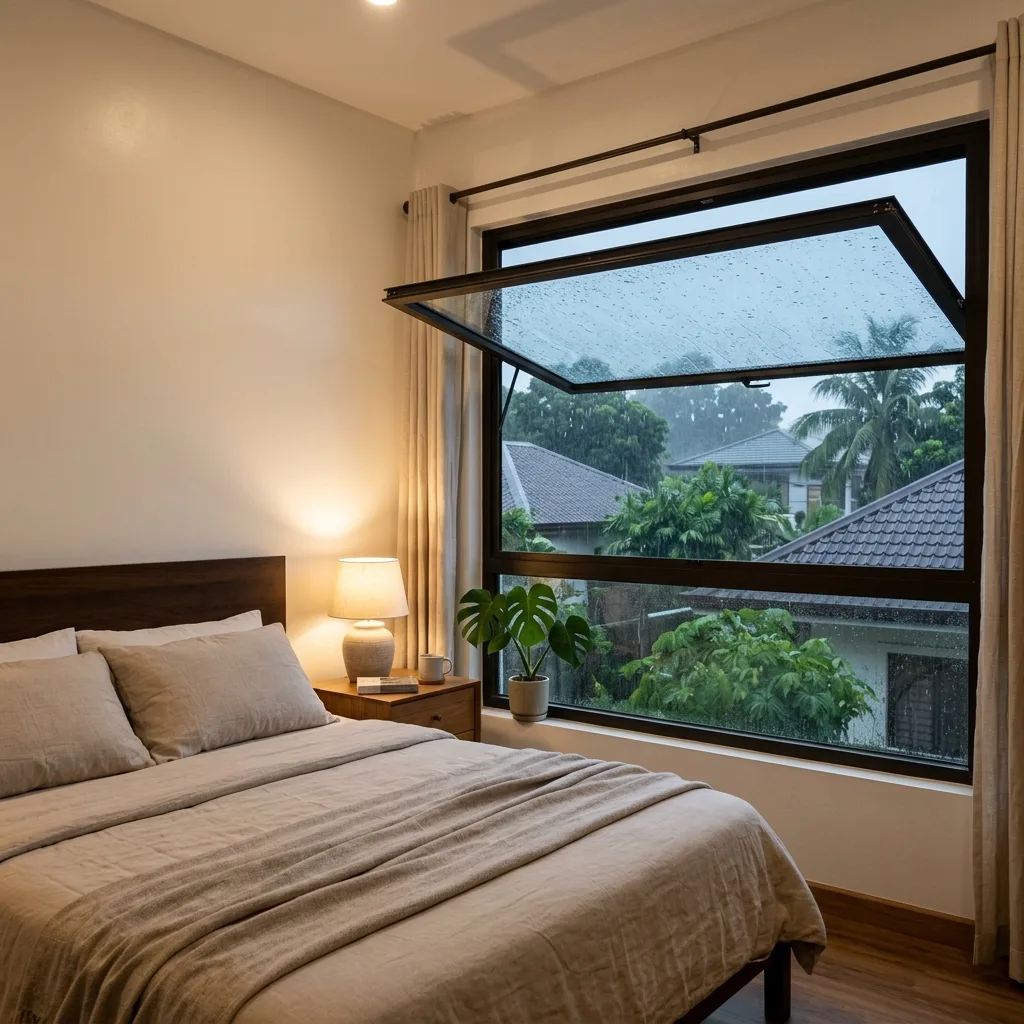
When homeowners renovate a Philippine house, they often order the same window type for every room to maintain a uniform exterior look. This is a mistake. A living room needs maximum cross-ventilation. A kitchen needs heat exhaust. But a bedroom? A bedroom has unique requirements that dictate a specific approach to window selection. The window you sleep next to determines your nighttime comfort, your air conditioning bill, and whether you wake up to a puddle on your floor during monsoon season.
The 4 Critical Requirements for Bedroom Windows
Before evaluating window types, we must define what a bedroom window actually needs to do in the Philippine climate:
1. Rain-proof ventilation — Can you leave it open while sleeping during the monsoon months (June to November) without water ruining your floor if it rains at 3 AM?
2. Acoustic isolation — Does it block neighborhood dogs, tricycles, and early morning roosters so you can sleep?
3. Air conditioning retention — Does it seal tightly when closed so your inverter AC doesn't work overtime cooling the street outside?
4. Security — Is it difficult to breach from the outside while you are asleep inside?
The 4 Contenders Compared
| Window Type | Rain Ventilation | Noise Reduction | AC Sealing | Security |
|---|---|---|---|---|
| Awning | Excellent (deflects rain) | Very Good (compression) | Very Good | Excellent |
| Casement | Poor (must close) | Very Good (compression) | Very Good | Excellent |
| Sliding | Poor (rain blows in) | Moderate (brush strips) | Moderate | Good |
| Jalousie | Good (slats deflect rain) | Very Poor (constant gaps) | Very Poor | Very Poor |
Our Top Recommendation: The Awning Window
For 80% of Philippine bedrooms, awning windows are the undisputed best choice. Here is the engineering behind why:
The Rain Canopy Effect: Because awning windows hinge at the top and push outward from the bottom, the glass panel acts as a protective canopy over the opening. You can leave the window open 100mm to 150mm every night. If it rains while you are sleeping, the water hits the angled glass and drips outside. You never have to wake up at 2 AM to shut the windows.
Superior Sealing: When closed and locked, the multi-point locking mechanism pulls the window sash tight against EPDM rubber gaskets. This compression seal blocks out tricycles and street noise far better than sliding windows (which rely on porous brush strips).
Security While Open: A burglar cannot easily squeeze through an awning window that is pushed open 150mm. The friction stays hold the glass rigid, creating a physical barrier even when ventilating.
When to Choose Casement Windows
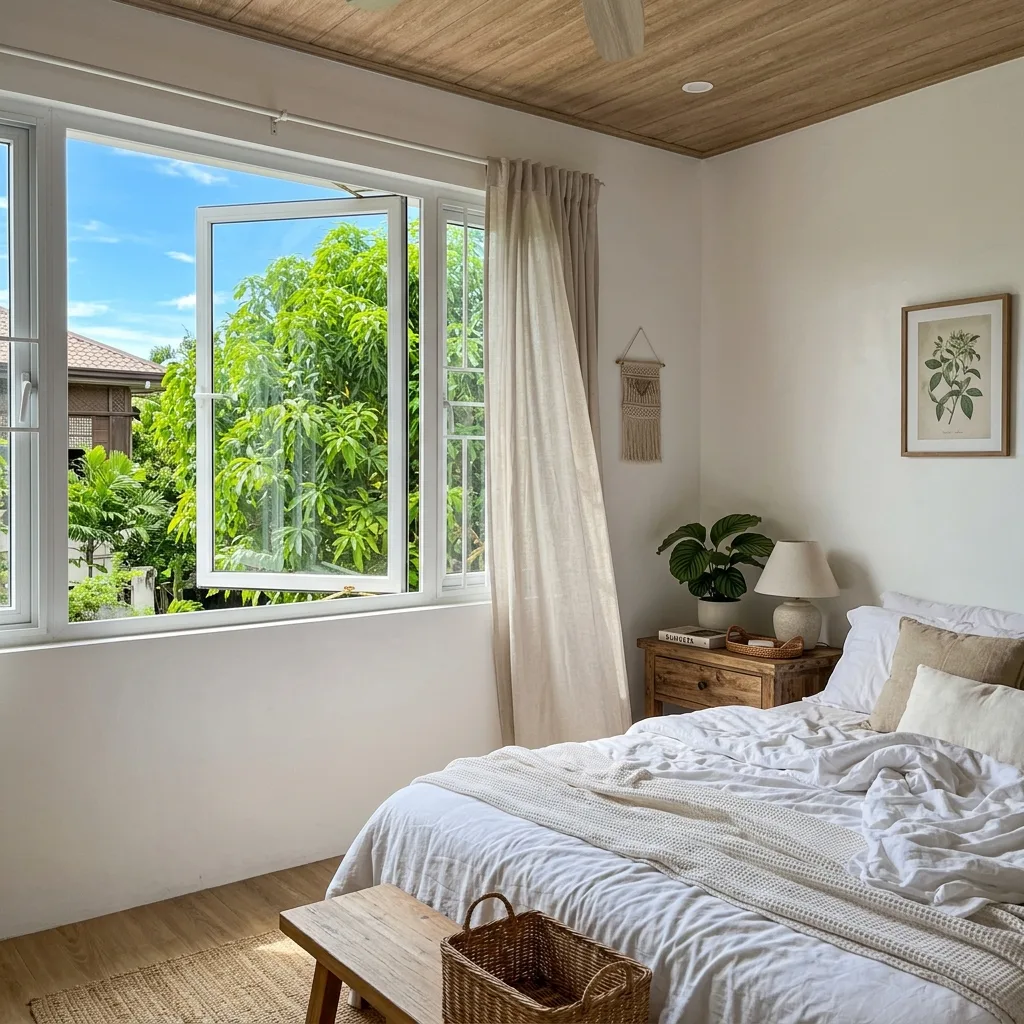
Casement windows (hinged on the side, swinging outward like a door) offer the same excellent sealing and security as awning windows, but they trade rain protection for maximum airflow.
Use casement windows in your bedroom if:
1. The room is exceptionally hot. Casement windows swing open 90 degrees, turning the entire window opening into a giant air scoop that catches passing breezes and funnels them into the room.
2. The window is protected by a deep eaves overhang (1 meter+). If your roof overhang is deep enough to protect the window from rain, you can enjoy the massive ventilation of a casement without the rain anxiety.
3. You only use the bedroom during the day. If this is a guest room or you work nights and sleep days, you are awake to monitor the weather and close the casement when it rains.
The Fatal Flaw: If you leave a casement window open at night and it rains, rain will pour directly into your bedroom. There is zero protection.
When Sliding Windows Make Sense
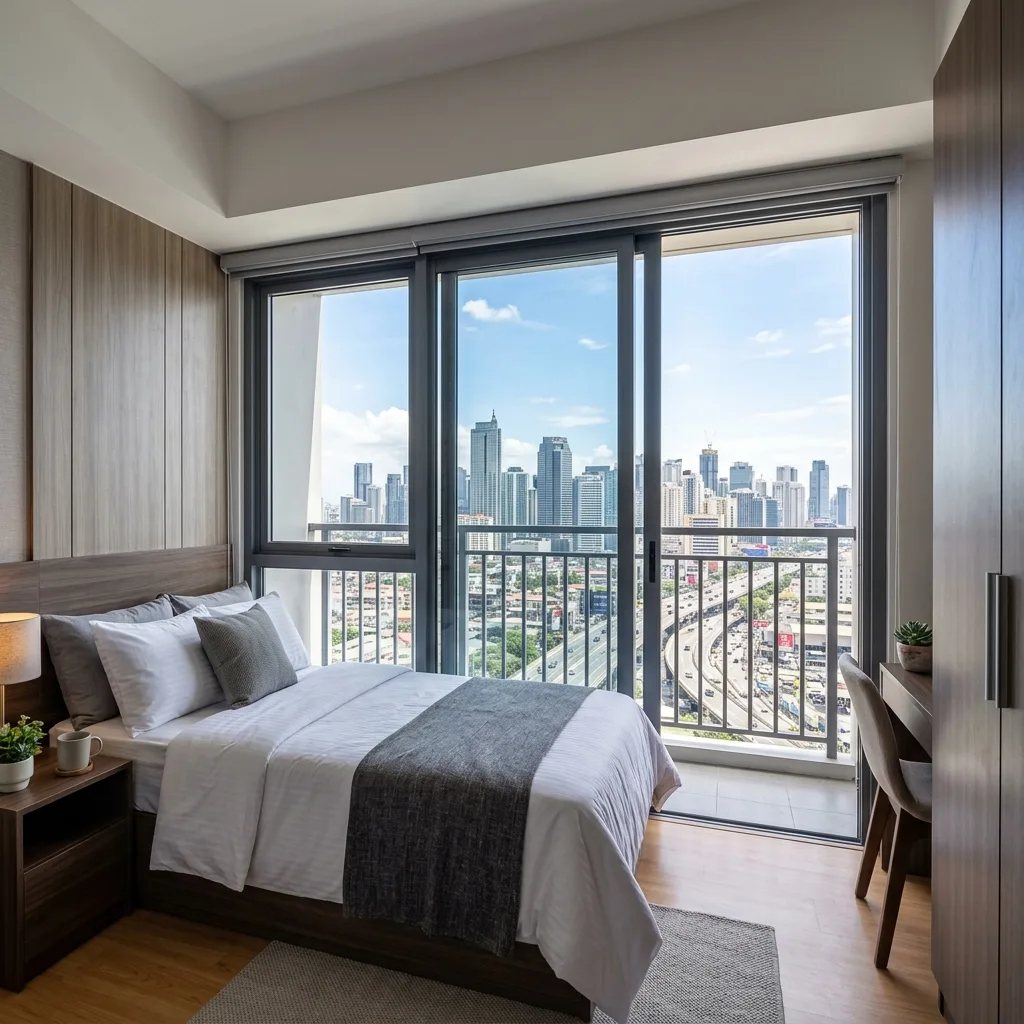
Sliding windows are the most common but technically the weakest performer for bedrooms — they max out at 50% ventilation, offer poor noise reduction, and let rain in when open. However, they are absolutely required in specific architectural situations:
High-Rise Condominiums: Above the 5th floor, wind speeds become dangerous for outward-swinging windows. Sliding windows operate entirely within their track, meaning they cannot catch the wind like a sail. Most condo admins in Metro Manila strictly require sliding windows.
Windows facing walkways: If your bedroom window opens out onto a balcony, a terrace, or a narrow walkway, an outward-swinging awning or casement window becomes a physical hazard for people walking by. Sliding windows require zero exterior clearance.
Extra-wide openings: If your bedroom has a 3-meter wide opening facing a garden, sliding windows are the most structurally sound way to fill that space with glass.
Why Jalousie Windows Must Be Replaced
If you still have glass jalousie (louvre) windows in your bedroom, upgrading them is the single best investment you can make in your home's comfort and security.
| The Jalousie Problem | The Engineering Reality |
|---|---|
| Security Flaw | Glass slats can be silently slipped out of their clips from the outside. |
| Acoustic Failure | Hundreds of overlapping gaps let street noise pour in, even when "closed." |
| AC Inefficiency | Those same gaps leak cold air 24/7. Your inverter AC will never spin down. |
| Typhoon Vulnerability | Wind-driven horizontal rain blows straight upward through the overlapping slats. |
Glass Specifications for Better Sleep
The frame is only half the window. For a bedroom, you should upgrade from standard 6mm clear glass to one of these performance options:
Laminated Acoustic Glass (6.38mm or 10.38mm PVB): If your bedroom faces a busy road, this is mandatory. The polyvinyl butyral (PVB) interlayer dampens sound vibrations, dropping exterior noise by up to 35 decibels. It turns a loud street into a distant hum.
Tinted Glass (Bronze or Gray): If your bedroom faces west and bakes in the afternoon sun, tinted glass blocks 30% to 50% of solar heat gain before it enters the room. This makes the room dramatically cooler when you go to bed.
Frosted Glass: If your bedroom is on the ground floor facing a neighbor's house, specify frosted (acid-etched) glass for the lower panes to maintain permanent privacy while still letting natural daylight pour in through the top.
Cost Comparison (2026 Prices)
For a standard Philippine bedroom with two window openings (approximately 1.2m × 1.2m each), here is the total estimated cost for high-quality aluminum frames with 6mm tempered glass:
| Window Type | Cost per Window | Total (2 Windows) |
|---|---|---|
| Sliding (Series 798) | ₱6,500 – ₱8,500 | ₱13,000 – ₱17,000 |
| Casement (Series 79) | ₱8,000 – ₱11,000 | ₱16,000 – ₱22,000 |
| Awning (Series 79) | ₱8,500 – ₱12,000 | ₱17,000 – ₱24,000 |
| Laminated Acoustic Upgrade | +₱2,500 per window | +₱5,000 total |
The ROI of Awning Windows: Yes, awning windows cost about 20% to 30% more than sliding windows. But for an extra ₱4,000 to ₱7,000 per bedroom, you gain the ability to sleep with fresh air during the monsoon, you dramatically reduce street noise, and you lower your AC bills through superior compression sealing. It is an investment that pays daily dividends in sleep quality.
Ready to Upgrade Your Bedroom Windows?
Free site visit, laser measurement, and an itemized quotation comparing awning and sliding options for your specific rooms.