How to Soundproof Your Condo with the Right Glass Windows
You hear every truck on EDSA. Every bus on C5. Every motorcycle at 2 AM. Your developer windows are practically invisible to sound. Here's how to fix that — permanently.

Noise is the number one quality-of-life complaint among Philippine condo residents — ahead of parking, building maintenance, and even internet speed. And in most cases, the source is the same: developer-installed windows that provide almost zero acoustic insulation. A standard 6mm single-pane sliding window blocks only 22 to 26 decibels of sound. That is nearly useless against a highway that generates 75 to 85 dB at the facade. You are sleeping, working, and living inside a room where traffic noise arrives at 50 to 60 dB — the equivalent of a constant conversation you cannot turn off.
The fix is not expensive curtains, not foam panels on the walls, and not a white noise machine. The fix is the glass. Upgrading from standard 6mm clear glass to the right acoustic specification drops that 50-60 dB room noise to 25-35 dB — the difference between "I can hear every engine" and "I forgot I live next to a highway."
Understanding STC — The Only Number That Matters
STC (Sound Transmission Class) measures how many decibels a window assembly blocks. It is the single most important specification for acoustic windows — more important than glass thickness, brand name, or price. Here is what each STC range actually means in your daily life:
| STC Rating | What You Hear | Adequate For |
|---|---|---|
| 22-26 (developer standard) | Every vehicle type clearly audible, horns startling, conversations difficult near window | Nothing — this is the problem |
| 28-30 | Traffic audible as background noise, loud trucks and buses still noticeable | Quiet residential streets only |
| 32-35 | Traffic reduced to a low hum, individual vehicles not distinguishable | Secondary roads, moderate traffic |
| 35-38 | Traffic barely noticeable, comfortable for sleeping and focused work | Major roads (EDSA, C5, provincial highways) |
| 38-42 | Traffic essentially inaudible, near-silent room | Airport flight paths, adjacent to elevated rail |
The critical insight: Every 10 dB reduction is perceived as roughly half the loudness. Going from STC 26 (developer window) to STC 36 (good acoustic glass) means traffic noise in your room drops to approximately one-quarter of its current volume. That is not a subtle improvement — it is transformative.
The Five Glass Options — Ranked by Performance
| Glass Specification | STC Rating | Cost/SQM | Fits Standard Frame? | Best For |
|---|---|---|---|---|
| 6mm clear single (developer) | 22-26 | ₱600-₱900 | ✅ Yes | Nothing — replace this |
| 10mm single pane tempered | 28-30 | ₱1,800-₱2,500 | ✅ Yes | Quiet streets only |
| 6.38mm laminated (standard PVB) | 30-34 | ₱2,200-₱3,200 | ✅ Yes | Moderate noise improvement |
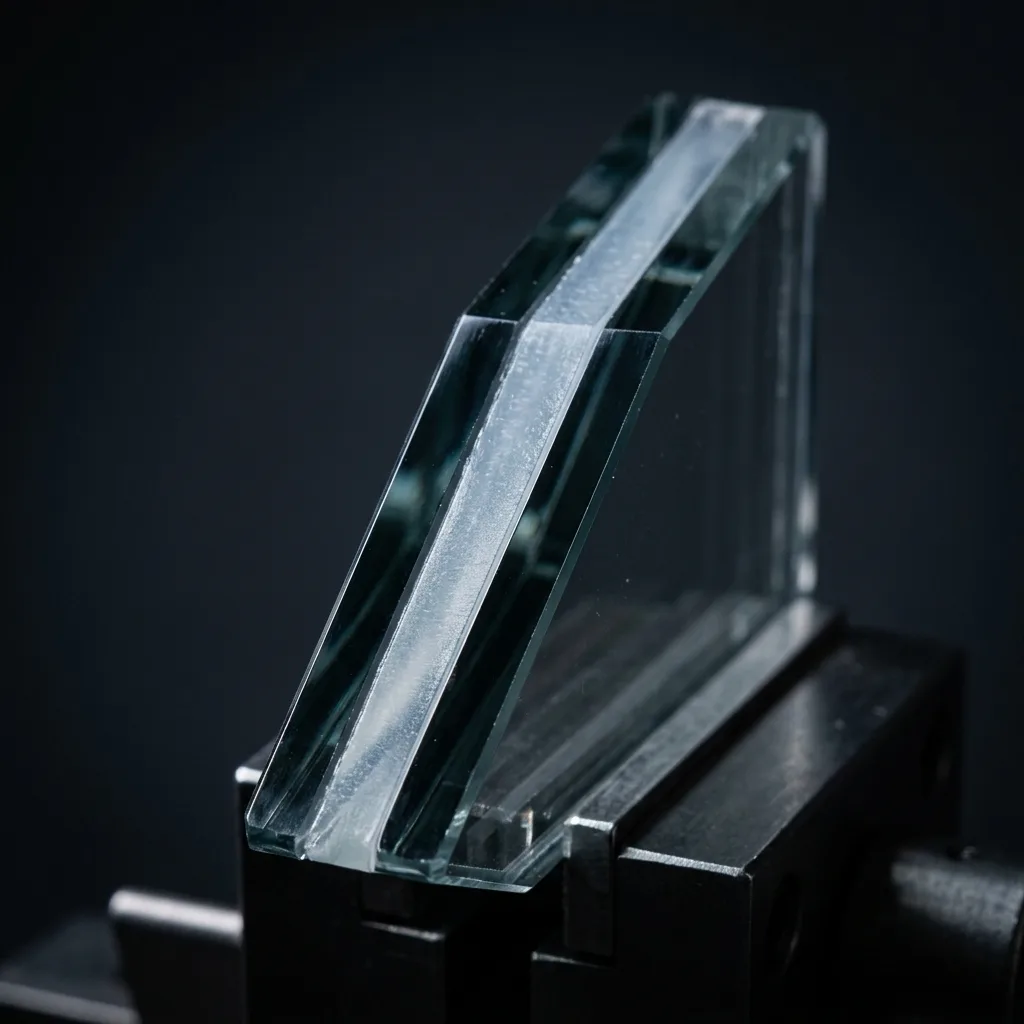
| 10.38mm laminated (acoustic PVB) | 35-38 | ₱3,500-₱5,000 | ✅ Yes | ★ Best value for highways |
| Double-glazed IGU (6+12+6mm) | 35-42 | ₱5,000-₱8,000 | ❌ Needs deeper frame | Maximum performance |
| Double-glazed + laminated inner | 40-45 | ₱7,000-₱11,000 | ❌ Needs deeper frame | Airport flight paths, MRT adjacent |
Our Recommendation: 10.38mm Laminated Acoustic Glass
For 80 percent of Philippine condos facing traffic noise, 10.38mm laminated glass with acoustic PVB interlayer is the best solution. Here is why:
Performance — STC 35-38 covers the noise levels of EDSA, C5, SLEX, and virtually every major Philippine road. Only airport flight paths and MRT-adjacent units need higher ratings.
Drop-in replacement — at 10.38mm total thickness, it fits inside standard condo window frame channels designed for 6mm to 12mm glass. No frame modification needed. No deeper frame required. No building management facade change approval issues.
Low-frequency blocking — the acoustic PVB interlayer is specifically formulated to dampen low-frequency sound vibrations (100-500 Hz) — the deep rumble of trucks, buses, and diesel engines that standard glass cannot block. Regular PVB blocks high-frequency noise but passes low-frequency rumble right through.
Safety bonus — laminated glass holds together when broken. The PVB interlayer keeps the fragments in place, maintaining the barrier. This is a significant safety advantage on high floors where wind-driven impact could break a panel.
Cost efficiency — at ₱3,500 to ₱5,000 per square meter, it delivers STC 35-38 performance. Double glazing achieves the same STC range but costs 40 to 60 percent more and requires frame replacement.
When Double Glazing Is Worth the Extra Cost
Double-glazed insulated glass units (IGUs) provide the highest possible acoustic performance — STC 35 to 45 depending on configuration. But they cost 60 to 100 percent more than laminated glass and require deeper window frames. The extra cost is justified in these specific situations:
Airport flight path — if your condo is under the approach or departure path of NAIA, Clark, or Mactan-Cebu airports, aircraft noise peaks at 90-100 dB at the facade. Laminated glass alone cannot reduce this sufficiently. Double-glazed with a laminated inner pane (STC 40-45) is the minimum specification.
MRT/LRT adjacent — units within 50 meters of elevated rail tracks experience both low-frequency rumble and high-frequency rail squeal. The air gap in double glazing is more effective at blocking the rail squeal frequency range than laminated glass alone.
Combined noise + thermal goal — if you also want to reduce solar heat gain (AC savings), double glazing delivers both acoustic and thermal performance. Laminated glass provides acoustic improvement but minimal thermal insulation.
The Seal Is 50% of the Solution
Even the best acoustic glass is useless if the frame leaks air. This is the most important lesson in acoustic window installation — and the one most people learn the hard way after spending ₱50,000 on laminated glass that performs no better than the windows it replaced.
Sound travels through air. A gap of just 1mm around the frame perimeter creates an acoustic short-circuit — sound waves bypass the expensive glass entirely and enter through the gap at nearly full volume. The result: your ₱5,000/sqm laminated glass performs like ₱900/sqm standard glass because the frame seal is compromised.
| Seal Component | What It Does | If Missing/Failed |
|---|---|---|
| Frame-to-wall structural silicone | Seals the gap between window frame and concrete opening | Sound enters through frame perimeter — biggest leak source |
| Compression gaskets (weatherstripping) | Seals the meeting point between panels when closed | Sound enters at panel meeting stiles — very common in sliding windows |
| Multi-point lock compression | Pulls panels tight against gaskets when locked | Gaskets not compressed = gaps remain open |
| Bottom track weatherstrip | Seals the gap between sliding panel and bottom track | Sound enters under the panel — easily audible as whistling |
| Weep hole covers | Blocks sound that enters through drainage holes | Small but real sound path — noticeable in otherwise well-sealed windows |
Why casement windows outperform sliding for sound: Casement and awning windows use compression gaskets with multi-point locks that pull the panel tight against the seal on all four edges simultaneously. This creates a dramatically tighter seal than sliding windows, which rely on wool-pile brush strips that compress over time and leave gaps. If noise is your primary concern, upgrading from sliding to casement windows (plus acoustic glass) can improve effective STC by 5 to 8 dB over the same glass in a sliding frame.
Real Cost for a Standard Condo Unit (2026)
| Unit Type | Windows | Glass-Only Upgrade | Full Frame + Glass |
|---|---|---|---|
| Studio (2 windows) | Sliding | ₱8,000 – ₱14,000 | ₱25,000 – ₱40,000 |
| 1-BR (3 windows) | Sliding | ₱12,000 – ₱21,000 | ₱35,000 – ₱55,000 |
| 2-BR (4-5 windows) | Sliding | ₱16,000 – ₱35,000 | ₱50,000 – ₱80,000 |
| 3-BR (6-8 windows) | Mixed | ₱24,000 – ₱56,000 | ₱70,000 – ₱120,000 |
"Glass-only upgrade" replaces the glass panels inside your existing frames — fastest and cheapest, but limited by the existing frame's seal quality. "Full frame + glass" replaces the entire window assembly with new frames, acoustic glass, and proper compression seals — provides the best possible acoustic performance.
Our recommendation: If your existing frames are less than 5 years old and in good condition, a glass-only upgrade to 10.38mm laminated acoustic glass delivers excellent results at 40 to 60 percent of the cost of full replacement. If your frames are older, corroded, or the seals are already compromised, full replacement with acoustic glass in new casement frames delivers the best long-term acoustic performance.
What Not to Waste Money On
Thicker single-pane glass (10mm or 12mm) — thicker glass blocks slightly more high-frequency sound, but barely improves low-frequency traffic rumble. Going from 6mm to 12mm single-pane gains only 4-6 STC points. Going from 6mm to 10.38mm laminated gains 10-12 STC points at similar cost. Laminated is dramatically better value.
Acoustic curtains — heavy curtains can absorb 2-3 dB of reflected room noise, but they do not block external noise from entering. The sound has already passed through the glass. Curtains treat the symptom, not the cause.
Foam acoustic panels — designed for recording studios to control room echo and reverberation. They do nothing to block external noise entering through windows. Zero. They are the wrong product for this problem.
Secondary glazing (adding a second window behind the first) — this can work, but only if the air gap between the two windows is 100mm or more. Most condo window sills are too shallow for this. And the result looks awkward — two visible window layers.
Our Acoustic Window Process
We start with a noise assessment — measuring the actual decibel level at your window facade and inside your room with the windows closed. This tells us exactly how much noise reduction is needed and which glass specification will achieve it. No guessing, no overselling, no underselling. From there, we recommend the most cost-effective glass upgrade for your specific noise exposure, coordinate with your building management for permits, and complete the installation within a single day for most units. The moment we close that last window, you will hear the difference — or rather, you will not hear anything at all.
Ready for a Quiet Condo?
Free noise assessment, glass specification recommendation, and itemized quotation — within 48 hours.