Window Grille vs No Grille — The Security vs Fire Safety Debate
Grilles keep intruders out. But they also keep you in — during the one emergency where seconds determine survival. Here's how to solve both problems.
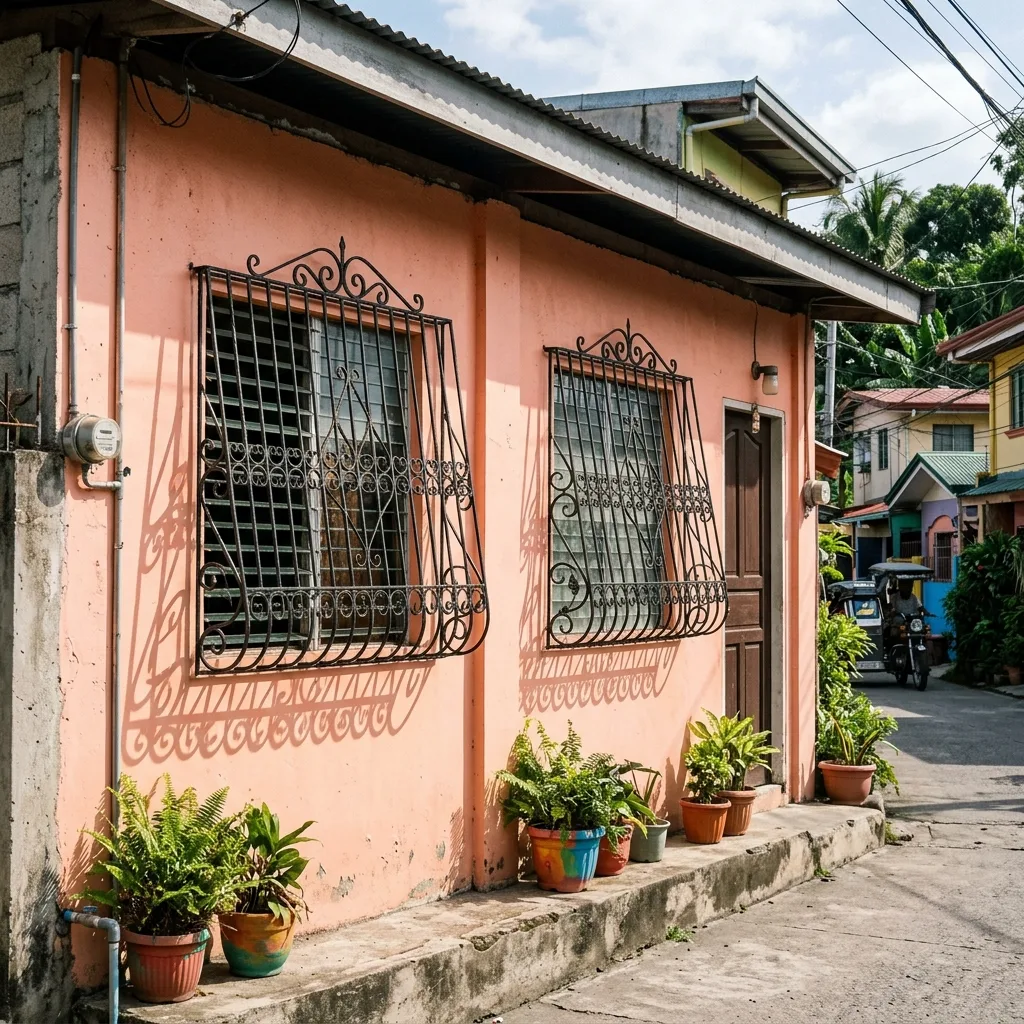
Window grilles are deeply embedded in Filipino home design. Almost every Philippine house has them — welded steel bars across every window, often across every door with glass. The reasoning is simple and valid: grilles prevent break-ins. But there is a counter-argument that Philippine homeowners almost never hear until it is too late, and it is this: the Philippines has one of the highest residential fire fatality rates in Southeast Asia, and sealed window grilles are a primary contributing factor. When your front door is blocked by fire and every window is grilled shut, there is no way out.
This article is not anti-grille. Grilles serve a real purpose in high-risk areas. This article is about making an informed decision — understanding both the security benefit and the fire escape risk — so you can choose the right approach for your specific situation.
The Case for Grilles — When Security Is the Priority
Let us be honest: no glass specification replaces a physical steel barrier. Tempered glass is harder to break than annealed, and laminated glass holds together when shattered — but a determined intruder with a hammer and 30 seconds can breach any glass panel. Steel grilles require cutting tools and significantly more time, making them the most effective window security for:
Ground-floor windows — accessible from the street or yard without climbing. These are the primary entry point for break-ins.
Homes in areas with higher crime risk — where visible security deterrents discourage attempted entry.
Unoccupied properties — vacation homes, OFW-owned houses left with caretakers, and rental properties where windows are not monitored.
Commercial properties — retail storefronts, warehouses, and ground-floor offices closed at night.
| Security Feature | Break-In Delay | Deterrence Level | Fire Escape Impact |
|---|---|---|---|
| Standard glass (6mm annealed) | 2-5 seconds | None | ✅ Can break out easily |
| Tempered glass (6mm) | 5-15 seconds | Low | ✅ Shatters into safe pieces |
| Laminated glass (6.38mm) | 30-60 seconds | Moderate | ⚠️ Harder to break out — but possible |
| Laminated glass (10.38mm) | 2-5 minutes | High | ⚠️ Difficult to breach from inside |
| Welded steel grilles | 10-30+ minutes | Very High | ❌ Impossible without cutting tools |
| Quick-release grilles | 10-30+ minutes | Very High | ✅ Interior release mechanism |
The Case Against Grilles — When They Become Deadly
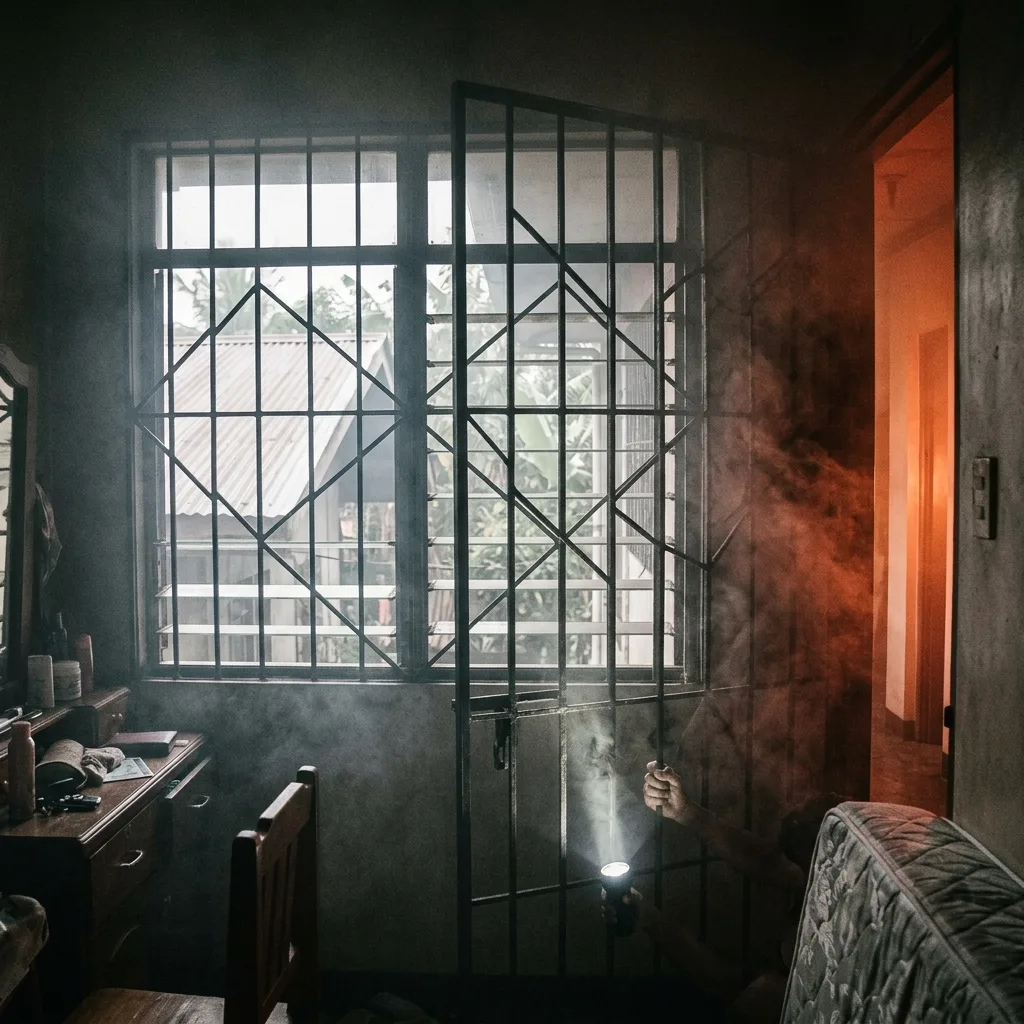
The Bureau of Fire Protection (BFP) Philippines reports that residential fires kill approximately 100 to 150 people per year in the Philippines — and in a significant percentage of fatal residential fires, victims were found near windows they could not open because of welded grilles. The BFP explicitly recommends:
At least one window per bedroom without fixed grilles — or with grilles that have an interior quick-release mechanism
At least two independent exit routes per floor — if the hallway is one exit, a window must be the second
All occupants must know how to operate quick-release mechanisms — practice during daylight so muscle memory works in darkness and smoke
Children's bedrooms are the highest priority — children cannot break glass or force open stuck windows under stress
The uncomfortable truth: In a house fire, you have 2 to 3 minutes to evacuate before conditions become unsurvivable. Smoke fills a room from the ceiling down. By the time you realize you need to escape through a window, you may have less than 60 seconds of breathable air remaining. Welded grilles make that window useless. Quick-release grilles or grille-free windows with security glass give you a way out.
Modern Alternatives — Security Without the Cage
Glass and window technology has advanced significantly. Today there are security solutions that approach grille-level protection without blocking emergency egress:
| Alternative | How It Works | Security Level | Cost per Window | Fire Escape |
|---|---|---|---|---|
| 6.38mm laminated glass | PVB interlayer holds broken glass — barrier remains intact | Moderate | ₱2,500 – ₱4,000 | ✅ Breakable with force |
| 10.38mm laminated glass | Thicker laminate — very difficult to penetrate | High | ₱4,000 – ₱6,500 | ⚠️ Difficult — use designated exit |
| Security film retrofit | Adhesive polyester film applied to existing glass | Moderate | ₱1,500 – ₱3,000 | ✅ Glass still breakable |
| Multi-point locking casement | 3-5 lock points compress seals — very hard to force open | High | ₱5,000 – ₱8,000 | ✅ Unlocks from inside instantly |
| Quick-release grilles | Steel grilles with interior lever/key release | Very High | ₱3,000 – ₱6,000 | ✅ Releases in 2-3 seconds |
| Alarm sensors on windows | Vibration/break sensors trigger alarm system | Deterrent only | ₱800 – ₱2,000 | ✅ No physical barrier |
Our Recommendation by Floor Level
| Location | Recommended Approach | Why |
|---|---|---|
| Ground floor — high-risk area | Quick-release grilles + laminated glass | Maximum security with guaranteed fire escape |
| Ground floor — gated subdivision | Multi-point casement + 6.38mm laminated | Perimeter wall provides first barrier — grilles unnecessary |
| Ground floor — bedrooms | NO fixed grilles — quick-release only | BFP recommendation — bedrooms must have emergency exit |
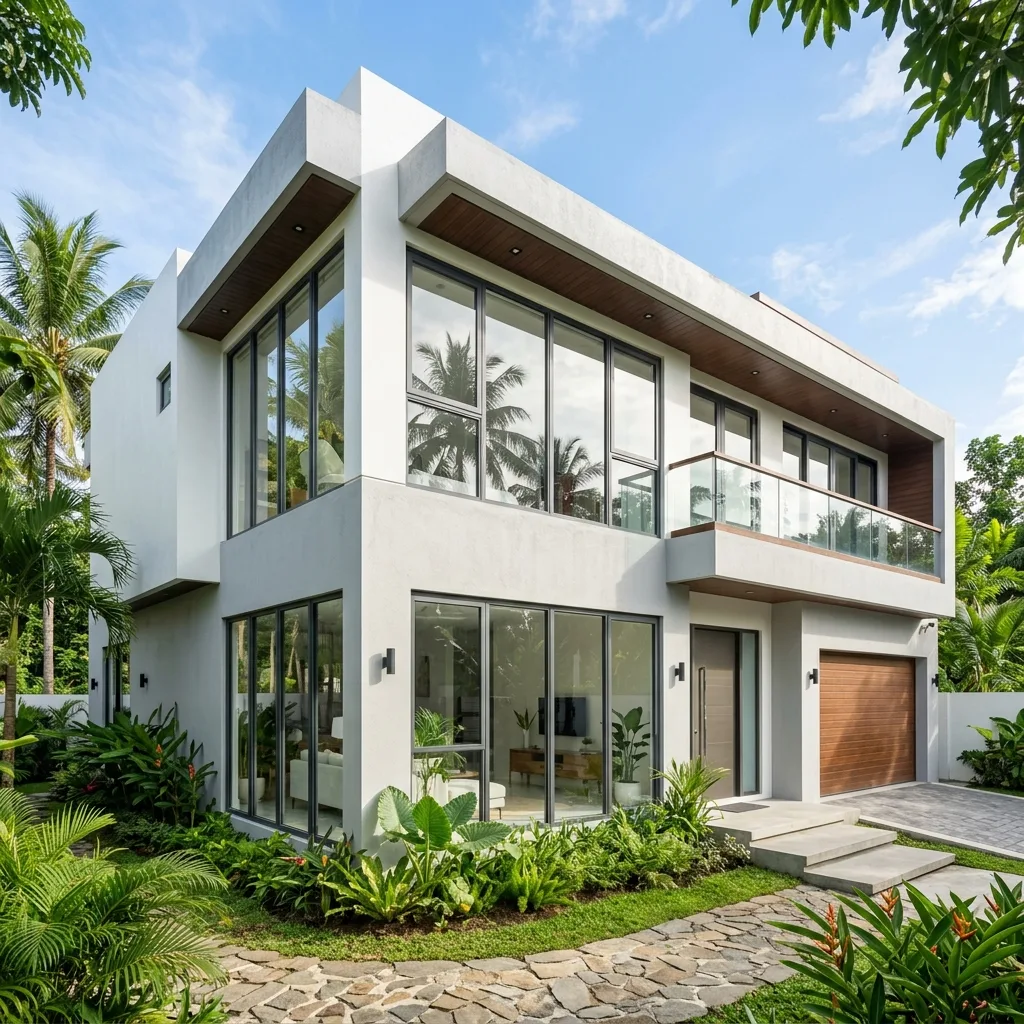
| Second floor | Multi-point casement + tempered glass | Height reduces break-in risk — no grilles needed |
| Third floor and above | Standard tempered glass | Height is the security barrier — grilles serve no purpose |
| Condo (any floor) | No grilles — usually prohibited by building management | Condos prohibit exterior grilles for facade uniformity |
If You Keep Your Grilles — Do This
If you decide that grilles are necessary for your security situation, take these steps to reduce the fire escape risk:
Convert at least one bedroom window to quick-release grilles — interior lever mechanism that opens the grille from inside in 2 to 3 seconds. Cost: ₱3,000 to ₱6,000 per window — a small price for a fire escape route.
Practice the release mechanism monthly — every family member, including children old enough to reach the lever, should practice opening the quick-release in the dark. In a real fire, smoke makes the room pitch black.
Install smoke detectors in every bedroom — early warning gives you the 2 to 3 extra minutes needed to reach the window. A ₱300 smoke detector can save your family's life.
Keep the grille-free window exit clear — no furniture blocking the path to the designated emergency exit window. No storage piled under it. The path must be clear at all times.
Have a fire escape plan that uses the window — if your bedroom door is hot to the touch (do not open it), the window is your exit. Know which window, know how to open it, know where to go after you are outside.
The Bottom Line
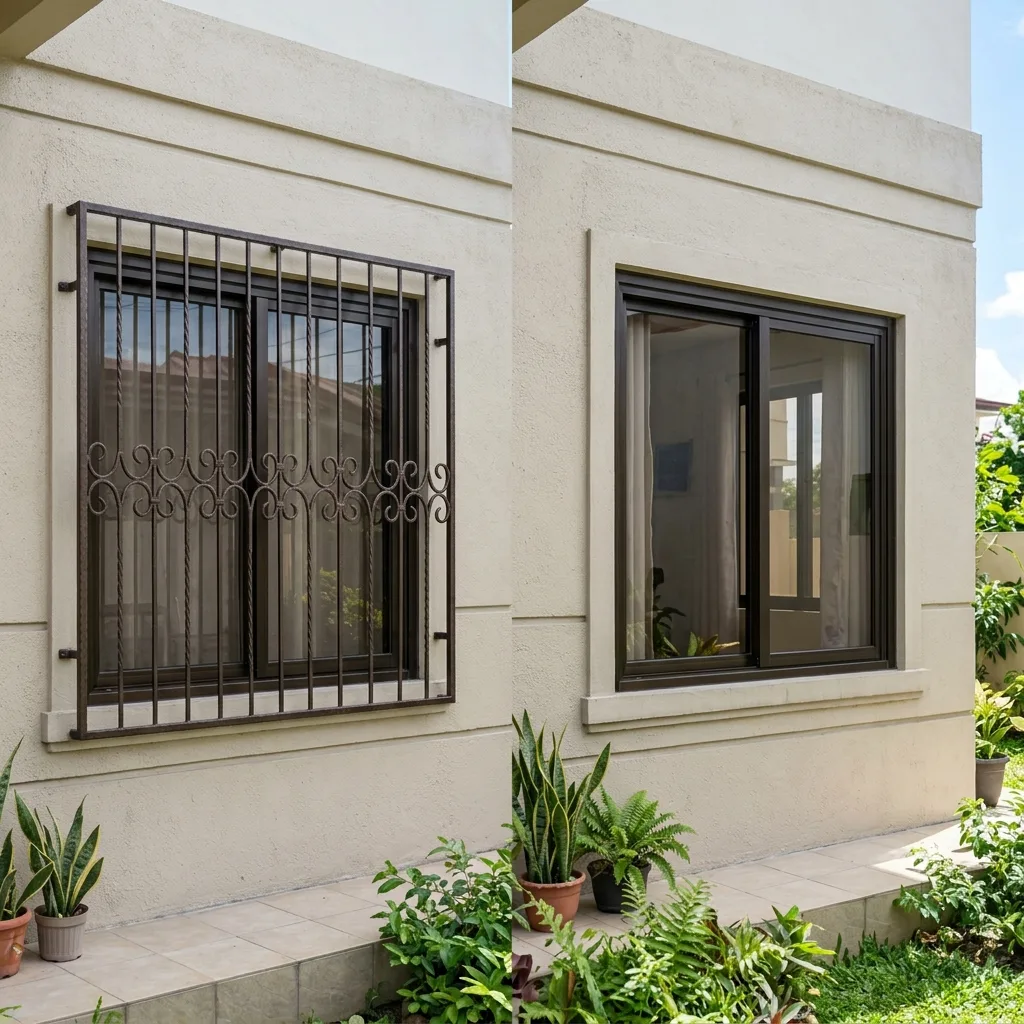
Grilles are not wrong. Fixed, welded, no-exit grilles on every window — that is wrong. The smart approach in 2026 is layered security: laminated glass that resists penetration, casement windows with multi-point locks that resist forced entry, and quick-release grilles on ground-floor windows that provide steel-barrier security with a 3-second emergency release. This combination gives you security that approaches traditional grilles while maintaining the fire escape routes that save lives. And as a bonus — your home looks significantly more modern and valuable without the caged-in appearance.
Need Security Window Solutions?
Free assessment of your current windows — security options, fire escape planning, and itemized quotation within 48 hours.