How to Clean Aluminum Window Frames — Step by Step
Philippine tropical conditions are brutal on aluminum window frames. High humidity, salt air, and intense UV rays cause oxidation and pitting. Here is the professional, step-by-step guide to cleaning and protecting your frames without damaging the finish.
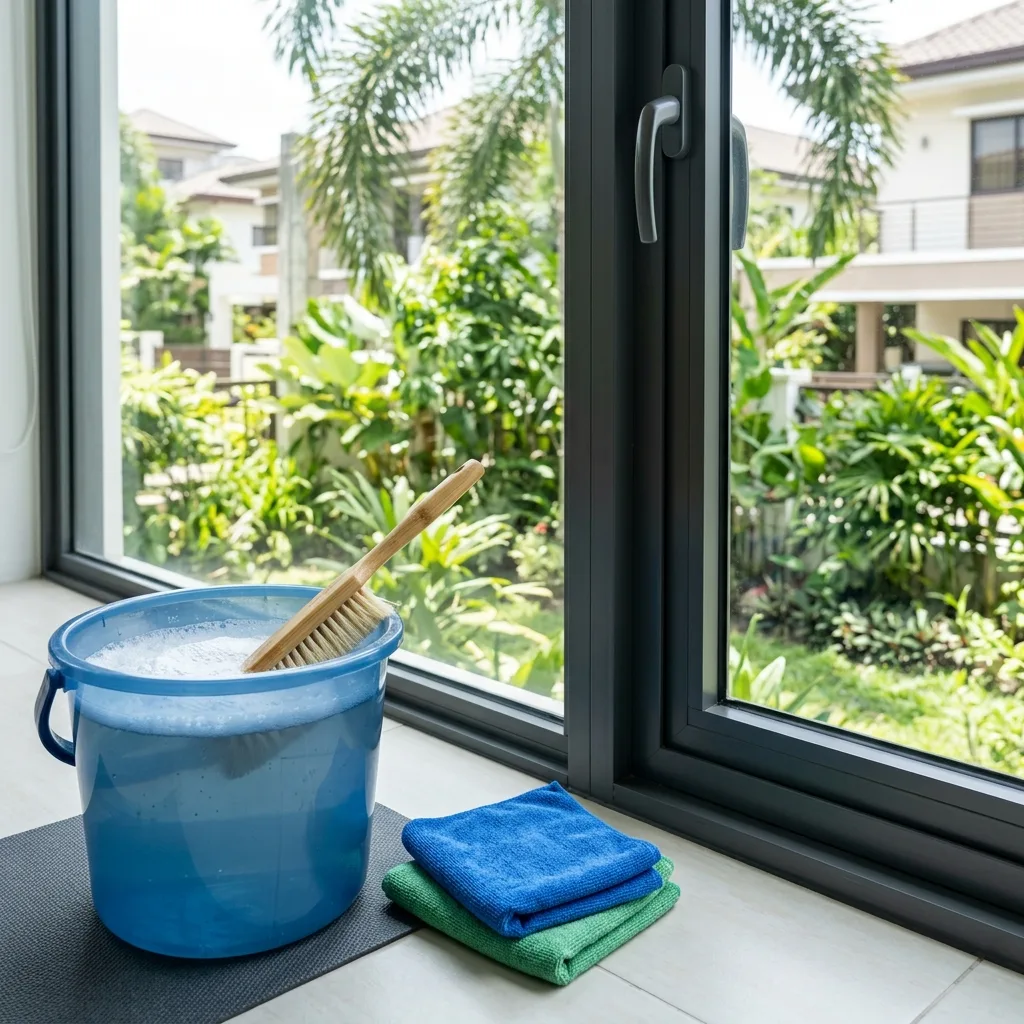
Aluminum is incredibly durable, but it is not maintenance-free. Philippine tropical conditions — relentless high humidity, salt-laden air near coastal areas, monsoon rains driving dirt into crevices, and intense equatorial UV radiation — create the perfect storm for metal degradation. Regular, correct cleaning extends the life of an aluminum frame from a typical 5 to 10 years (if neglected) to 15 to 25 years (if maintained). However, cleaning aluminum incorrectly can actually accelerate its destruction. Here is the definitive procedure that protects your window frames rather than destroying them.
Understanding the Finish: Anodized vs. Powder-Coated
Before you touch a sponge to your window, you must know what finish you are cleaning. The finish dictates how aggressive you can be.
Powder-Coated Aluminum: This is a baked-on paint finish (usually white, black, or dark brown). It is highly susceptible to scratching. If you use a green scouring pad on powder coating, you will permanently dull the finish and create microscopic scratches where dirt and mold will embed themselves forever.
Anodized Aluminum: This is an electrochemical process that thickens the natural oxide layer of the metal (usually silver/mill finish or dark bronze). It is harder and more scratch-resistant than powder coating, but it is highly vulnerable to acidic or alkaline chemicals, which will cause it to discolor and pit.
The Professional Toolkit: What You Need
Throw away your abrasive sponges. Here is what professional window maintainers use:
Mild dish soap (Joy, Axion, or similar) — mixed with warm water in a bucket. This is your primary cleaning solution because it is pH neutral. It cuts grease and dirt without chemically burning the aluminum.
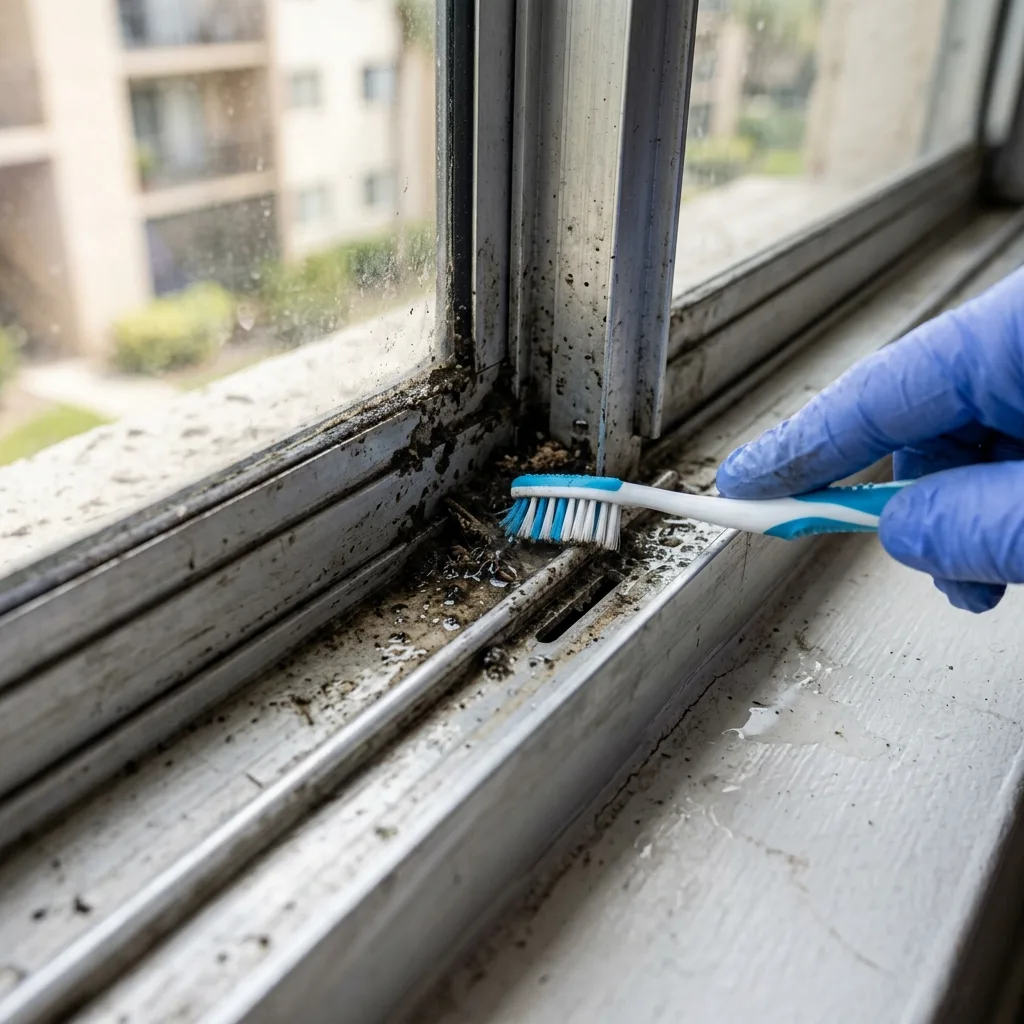
Soft-bristle brush or old toothbrush — essential for getting into the tight track channels, corners, and weep holes where dirt accumulates and solidifies.
Clean microfiber cloths — you need several. Microfiber traps dirt instead of pushing it around, and it will never scratch powder-coated finishes.
White vinegar (optional) — a mild household acid used specifically for removing stubborn oxidation spots on aging anodized frames.
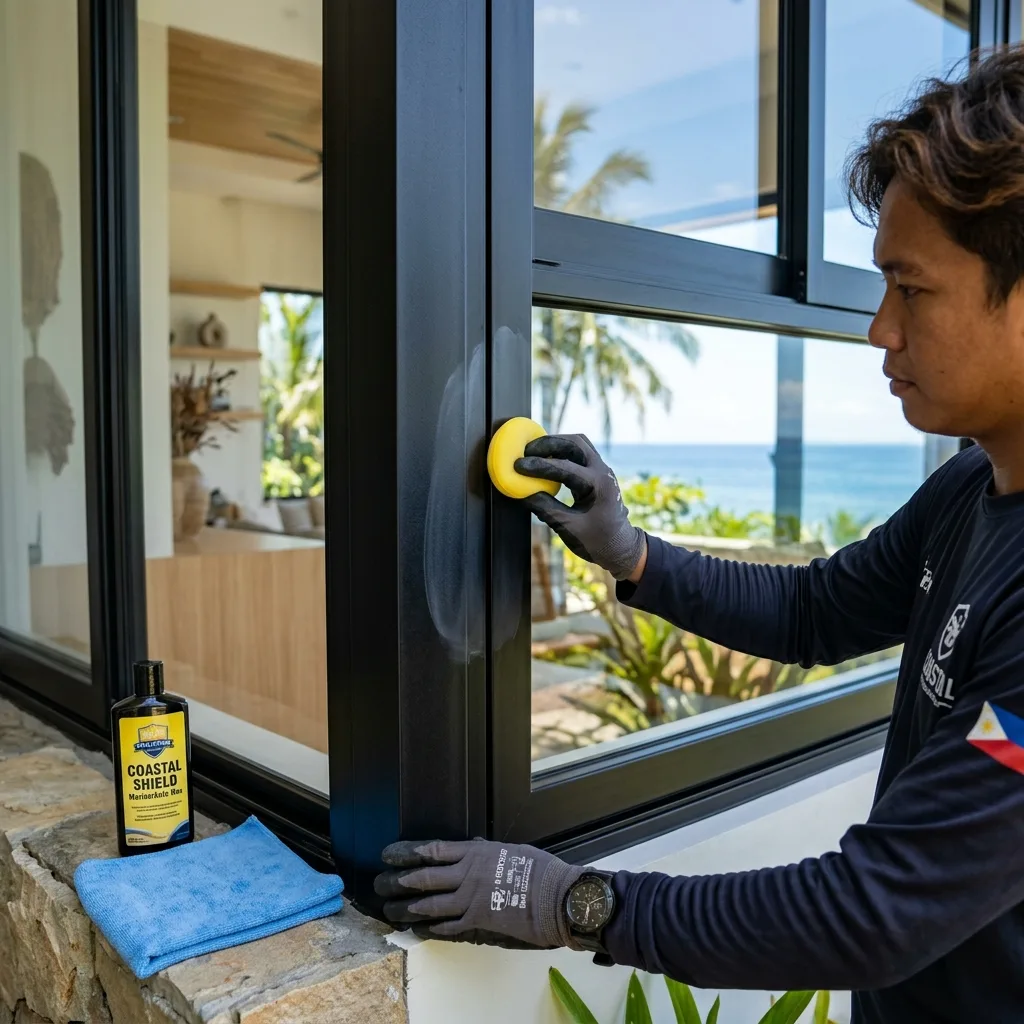
Automotive paste wax (Turtle Wax, Meguiar's, or similar) — for applying a protective coating after cleaning. This is the secret step that extends the life of the frame.
Step-by-Step Cleaning Process
Step 1: Dry Vacuum and Brush the Tracks
Never start with water. If you apply water to the dust and dead insects sitting in your window tracks, you will create a thick mud that is incredibly difficult to remove. First, use a vacuum cleaner with a brush attachment to suck out all loose debris. Then, take a dry toothbrush and vigorously scrub the corners and the small drainage slots (weep holes) at the bottom of the frame to ensure they are clear.
Step 2: Wash with Warm, Soapy Water
Dip a clean microfiber cloth into your bucket of warm, soapy water. Start from the top of the frame and work your way down to prevent dirty water from dripping onto areas you have already cleaned. Wipe the stiles (vertical sides), the top rail, and finally the bottom track. For stubborn, caked-on grime, apply the soapy water and let it sit for three minutes to soften the dirt, then wipe it away. Do not scrub forcefully.
Step 3: Address Oxidation (The White Powder)
If your aluminum frame is bare or anodized, you may notice white, powdery spots. This is aluminum oxide—the metal's version of rust. If left untreated, it will eventually eat holes through the frame (pitting). To remove light oxidation, mix equal parts white vinegar and water. Apply it to the oxidized area with a cloth, let it sit for two minutes, and rub gently. The mild acid will dissolve the oxidation. For severe oxidation, you may need a commercial aluminum cleaner from a hardware store, but follow the instructions carefully and never leave it on for more than a few minutes.
Step 4: Thorough Rinse and Complete Drying
Take a new, clean cloth dampened with plain water and wipe the entire frame to remove all soap and vinegar residue. Leaving soap on the frame will attract dust and create a sticky film over time. After rinsing, take a dry microfiber cloth and completely dry the frame. Water left sitting in the tracks will encourage mold growth and corrosion.
Step 5: Apply Protective Automotive Wax (The Crucial Step)
This is the step 95% of homeowners skip, and it is the most important one. Once the frame is completely clean and dry, take a soft applicator pad and apply a very thin coat of automotive paste wax to all exposed exterior surfaces of the aluminum frame. Let it haze for a few minutes, then buff it off with a clean microfiber cloth. The wax fills in microscopic pores in the finish, restoring a deep luster to faded powder coating. More importantly, it creates an invisible, hydrophobic barrier that repels rainwater, salt air, and UV rays, preventing oxidation from forming.
Cleaning Frequency by Location
How often you need to clean your windows depends entirely on your local microclimate within the Philippines:
| Geographic Location | Recommended Cleaning Frequency | Primary Environmental Threat |
|---|---|---|
| Coastal Properties (within 5km of the ocean) | Every 1 to 2 months | Airborne salt spray causing rapid galvanic corrosion and pitting. |
| Metro Manila / High-Traffic Urban Areas | Every 2 to 3 months | Smog, diesel soot, and acidic pollution breaking down the finish. |
| Suburban / Rural / Inland Areas | Every 4 to 6 months | Standard dust, pollen, and UV degradation. |
| Post-Typhoon (Anywhere) | Immediately after storm passes | Violent winds deposit salt and debris deep into the tracks. |
What NOT to Do: Common Cleaning Disasters
Many well-meaning homeowners destroy their expensive window frames by using the wrong tools. Avoid these fatal errors:
Never use steel wool, wire brushes, or abrasive scouring pads (like Scotch-Brite). They will permanently scratch through the protective anodized layer or powder coating. Once the bare aluminum is exposed to the humid Philippine air, it will corrode rapidly.
Never use muriatic acid (hydrochloric acid). This is commonly sold in Philippine hardware stores for cleaning bathroom tiles. If muriatic acid touches aluminum, it triggers a violent chemical reaction. It will dissolve the aluminum oxide AND the base aluminum underneath, causing irreversible, deep pitting in seconds.
Never use bleach or ammonia-based glass cleaners (like standard Windex) on the frame. While great for the glass, high-pH (alkaline) chemicals like ammonia degrade the structural integrity of aluminum over time and can cause powder coating to chalk and peel.
Never pressure-wash the frame joints. Commercial pressure washers deliver water at 2,000+ PSI. This immense pressure forces water past the structural silicone sealants and weatherstripping, driving moisture directly into your wall cavities where it will cause hidden rot and toxic black mold.
Never attempt to paint over heavily corroded frames. Paint does not adhere to aluminum oxide. If you try to paint a corroded, pitted frame, the new paint will begin peeling off in large flakes within three to six months. If the frame is severely corroded, replacement is the only viable, permanent solution.
When to Stop Cleaning and Start Replacing
There comes a point when a window frame is structurally compromised, and no amount of soap, vinegar, or wax will save it. You need to consider full replacement if you observe any of the following symptoms:
Deep Pitting: If the white oxidation has progressed to the point where you can feel actual divots, craters, or small holes in the metal with your fingernail, the frame wall has thinned out and lost its structural strength.
Visible Bowing or Deflection: If the bottom track is sagging or the vertical stiles are bowing inward under the weight of the glass, the aluminum profile has weakened.
Track Degradation: If the sliding track is so worn or corroded that the window panel wobbles side-to-side, or if the rollers are grinding metal-on-metal because the track ridge has eroded away, the window can no longer maintain an air or water seal. It will leak during the next monsoon.
If you catch the dirt and light oxidation early and implement a strict cleaning and waxing regimen, your high-quality aluminum windows will easily outlast your mortgage. But if the corrosion has taken hold, trying to scrub it away will only expose how weak the metal has become.
Are Your Windows Beyond Repair?
If your aluminum frames are heavily pitted, corroded, or leaking water during typhoons, cleaning will not save them. Contact GlassInstallerPH for a free structural assessment and window replacement quotation.