Fire-Rated Glass Doors in the Philippines — What You Need to Know
They look like standard glass doors, but they are highly engineered life-safety devices. Here is the technical breakdown of fire ratings, building code compliance, and exactly how these doors save lives during an emergency.
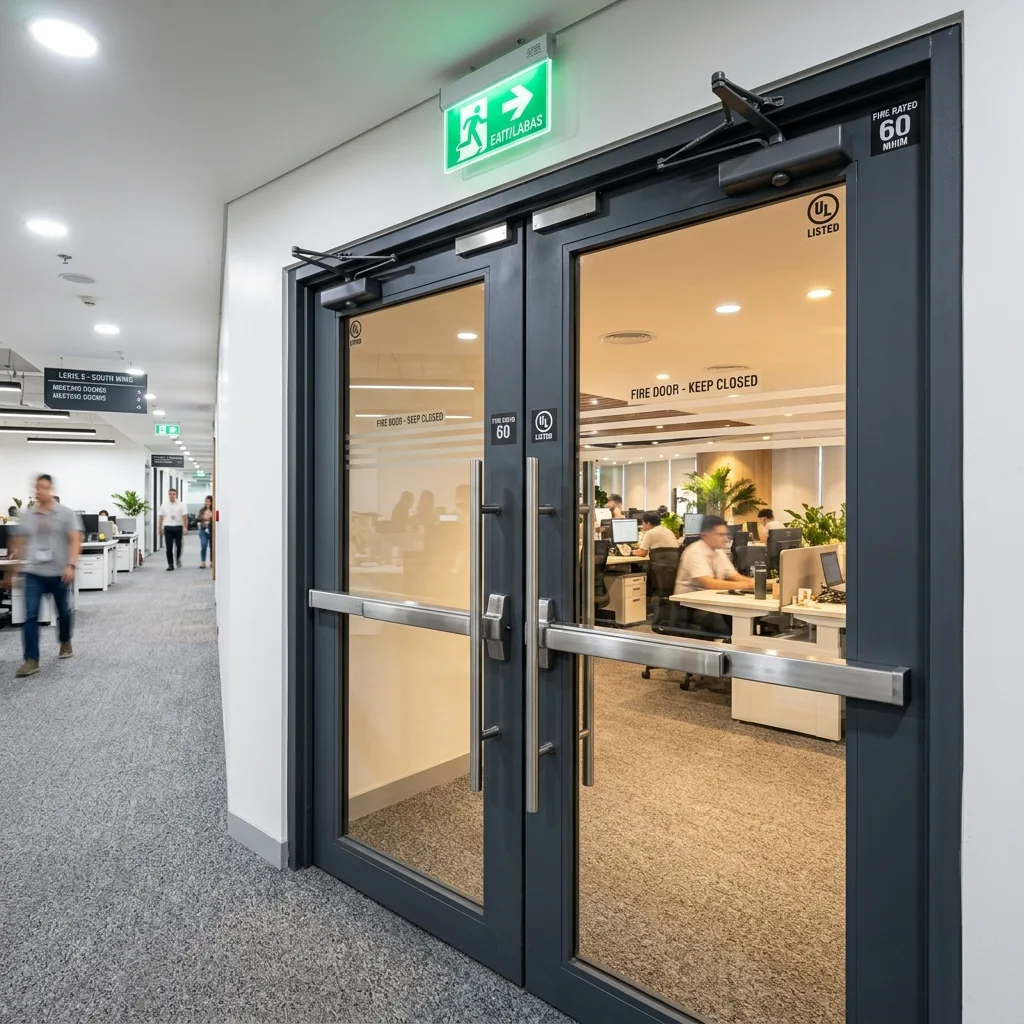
In modern Philippine commercial architecture, the desire for open, transparent, light-filled spaces often collides with the strict life-safety requirements of the Bureau of Fire Protection (BFP). Fire compartments must be sealed, but architects want visibility. The solution to this engineering conflict is the Fire-Rated Glass Door Assembly. These are not standard tempered glass doors; they are highly specialized, rigorously tested systems designed to block roaring 1,000°C infernos while maintaining perfect optical clarity during normal use.
The Code: Where Fire-Rated Glass Is Mandatory
The Philippine Fire Code (Republic Act 9514) and the National Building Code dictate strict compartmentation rules to prevent a fire from spreading rapidly through a building. Any doorway that pierces a fire-rated concrete wall must provide an equivalent level of fire resistance. Common mandatory locations include:
| Building Location | Typical Fire Rating Required | Why It Is Required |
|---|---|---|
| Stairwell Exit Enclosures | 60 to 120 Minutes | Protects the primary evacuation route from smoke and flames. |
| Corridor Separations (Hotels, Hospitals) | 30 to 60 Minutes | Prevents fire from jumping from one building wing to another. |
| Server Rooms / Electrical Closets | 60 to 120 Minutes | Contains high-risk electrical fires before they spread to offices. |
| Commercial Kitchens to Dining Areas | 60 Minutes | Protects patrons from grease fires originating in the kitchen. |
In the past, these doors had to be solid steel. Today, fire-rated glass allows these critical safety barriers to be completely transparent, improving building aesthetics and allowing occupants to see if there is fire or smoke on the other side of the door before opening it.
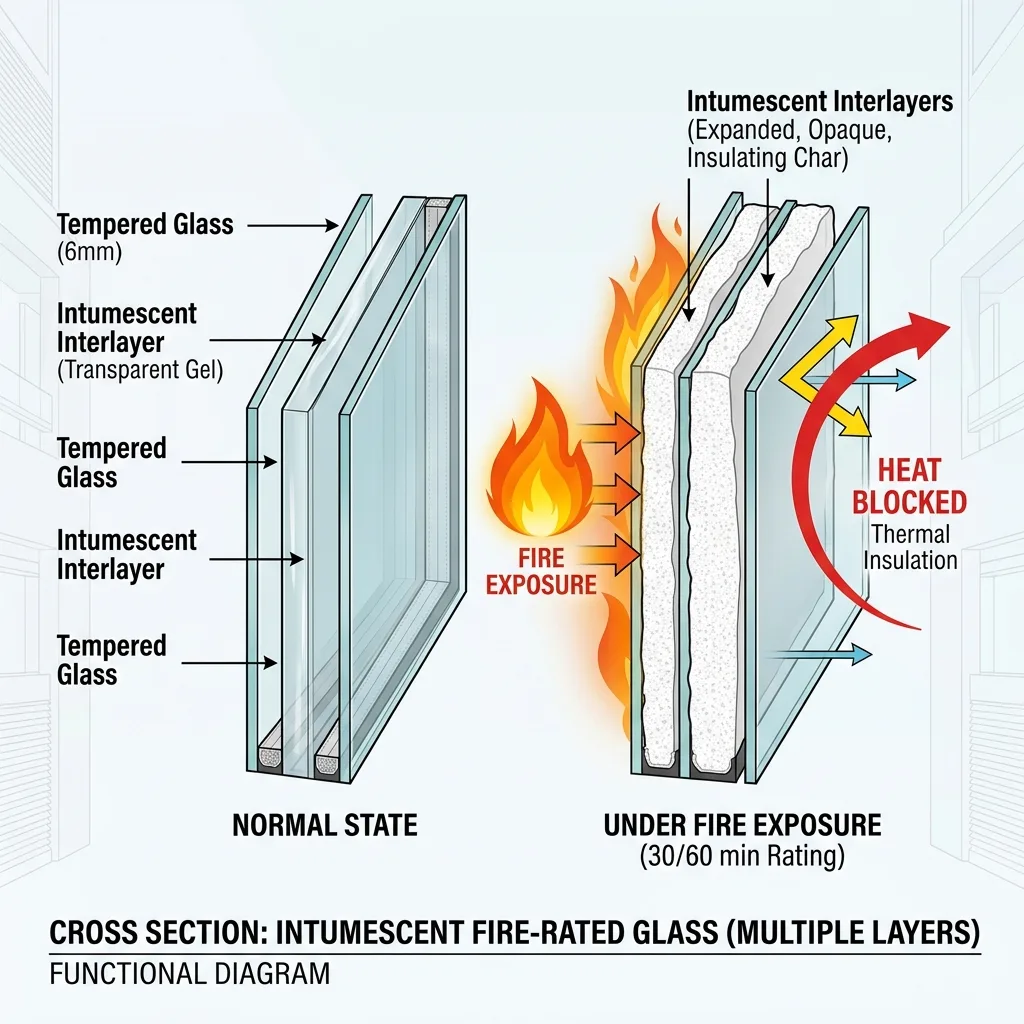
Integrity vs. Insulation (E vs. EI Ratings)
When specifying fire-rated glass for a Philippine project, you must understand the difference between the two primary rating classifications. Installing the wrong type can result in a failed BFP inspection or, worse, a fatal failure during a real emergency.
Fire Integrity (Class E): The glass will stop flames and toxic smoke from passing through for the rated time (e.g., 60 minutes). However, it does NOT stop radiant heat. The glass itself will become incredibly hot. If you stand near it, your clothes could spontaneously combust from the radiant heat alone. E-rated glass is only used for small vision panels or fixed windows where people will not linger.
Fire Insulation (Class EI): The glass stops flames, smoke, AND radiant heat. The side of the glass facing the fire might be 1,000°C, but the side facing the evacuation corridor remains cool enough to touch with your bare hand. All primary evacuation doors and full-height glass walls must be EI-rated to ensure people can safely run past the glass without suffering severe radiant burns.
Types of Fire-Rated Glass Technologies
Standard tempered glass shatters within 3 to 5 minutes of fire exposure. To achieve 60 or 120-minute ratings, manufacturers use advanced material science.
| Glass Technology | Classification | Visual Appearance | Typical Application |
|---|---|---|---|
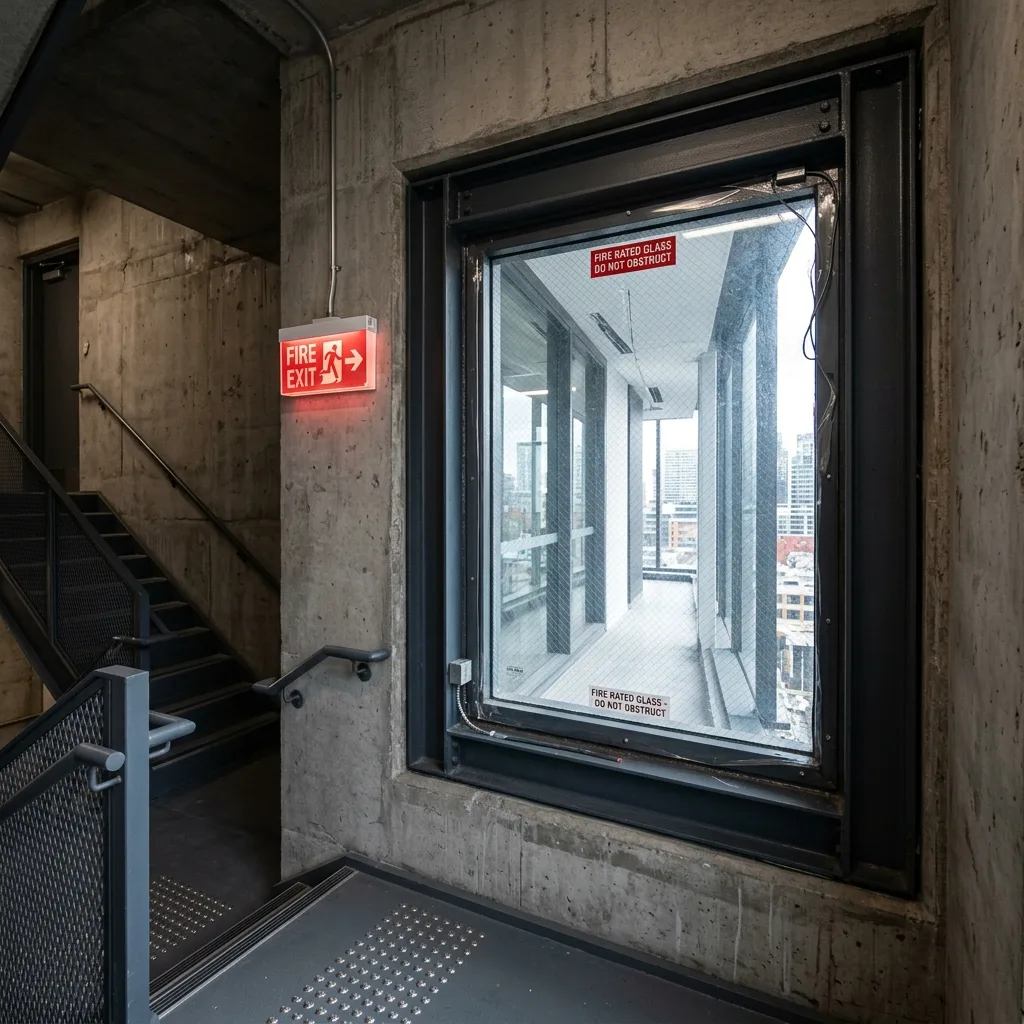
| Wired Glass | E (Integrity Only) | Embedded steel wire mesh (Industrial look) | Utility doors, older building retrofits. |
| Ceramic Glass (e.g., Pyran) | E (Integrity Only) | Perfectly clear, looks like normal glass | Small vision panels in steel fire doors. |
| Intumescent Laminated Glass | EI (Integrity + Insulation) | Thick, clear glass (multi-layered) | Full-glass fire doors, transparent fire walls. |
The "System" Requirement: Glass + Frame + Hardware
One of the most common mistakes made by inexperienced contractors in the Philippines is buying expensive fire-rated glass and installing it into standard aluminum frames. This completely voids the fire rating. Standard aluminum melts at 660°C; long before a 60-minute fire test is complete, an aluminum frame will melt into liquid, dropping the glass on the floor.
Fire-rated glass must be installed as a complete, certified assembly. This includes:
1. Steel Framing: The frames must be made of heavy-gauge steel or specially insulated proprietary profiles that will not melt or buckle under extreme thermal stress.
2. Intumescent Seals: The perimeter of the door leaf is fitted with intumescent strips. When exposed to heat, these strips expand dramatically to seal the gap between the door and the frame, preventing lethal smoke from leaking through.
3. Self-Closing Hardware: A fire door is useless if someone leaves it propped open. All fire-rated doors must feature heavy-duty, certified overhead door closers or floor springs. If the door must remain open for daily traffic flow, it must use an electro-magnetic hold-open device tied directly to the building's fire alarm system (FDAS), which drops the door shut the moment smoke is detected.
Cost and Lead Time Expectations (2026)
Because these are highly specialized life-safety products, they command a significant premium over standard architectural glass. Fire-rated assemblies are generally custom-fabricated based on the specific BFP requirements for the building zone.
| Fire Door Specification (Standard Single Leaf) | Estimated Budgetary Cost |
|---|---|
| 60-Min Integrity (E) with Ceramic Glass & Steel Frame | ₱60,000 – ₱85,000 per assembly |
| 60-Min Insulation (EI) with Intumescent Glass & Steel Frame | ₱90,000 – ₱140,000 per assembly |
| 120-Min Insulation (EI) with Intumescent Glass & Steel Frame | ₱150,000 – ₱220,000 per assembly |
Lead Times: Unlike standard tempered glass which can be cut locally in a few days, advanced intumescent fire-glass is often imported or processed through specialized autoclave lines. Expect lead times of 6 to 10 weeks from drawing approval to site delivery.
BFP Certification and Documentation
During your final occupancy inspection, the BFP fire inspector will demand proof that the installed doors meet the code. GlassInstallerPH provides complete turnover documentation for every fire-rated assembly we install, including the manufacturer's laboratory test certificates (UL, EN, or BS standards), material safety data sheets, and installation compliance letters. Without this paper trail, your building will not receive its Fire Safety Inspection Certificate (FSIC).
Require Fire-Rated Assemblies?
Ensure your commercial project passes BFP inspections on the first try. Contact our technical team to specify the correct EI or E-rated glass systems for your floor plan.